

Introduction: Frozen Russian assets plan emerges as Kyiv lifeline
The frozen Russian assets plan proposed inside the European Commission is reshaping the debate over how to keep Ukraine financed as its war costs intensify. With nearly €200 billion in Russian state and private assets immobilized since 2022, Brussels is now exploring a legally innovative workaround that could unlock billions for Kyiv without formally seizing Russian capital. This approach aims to preserve legal stability while filling Ukraine’s widening budget gap. Sources for this development include Politico’s detailed reporting (source: https://www.politico.eu/article/eu-frozen-russia-assets-ukraine-funding-proposal/).
A Workaround to Avoid Direct Seizure
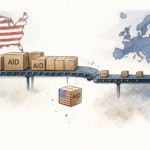
Because international law allows the EU and G7 to capture interest from immobilized Russian assets but not the core capital, policymakers have struggled to channel meaningful amounts to Ukraine. The new proposal introduces a creative solution: swap maturing Russian-linked cash—currently stored at the European Central Bank after passing through Euroclear—with short-term, zero-coupon EU bonds. These IOUs would replace the cash while keeping the underlying Russian principal formally untouched.
Officials told Politico that the idea was shared with EU deputy finance ministers in Brussels, where it received cautious early support but no formal commitments. Euroclear’s role is crucial, as most frozen Russian assets are held there (background: https://www.euroclear.com).
How the Scheme Would Function
Under current rules, Euroclear must transfer maturing Russian assets into an ECB deposit account, which generates interest. Up to now, that interest has been used to repay the EU’s portion of the G7’s €45 billion loan package to Ukraine.
The new plan would take those ECB-held funds and convert them into a “reparations loan”. Kyiv would only repay once Russia pays war reparations—an idea reiterated by Commission President Ursula von der Leyen in her State of the Union remarks (speech reference: https://ec.europa.eu/commission/presscorner/detail/en/speech_25_0000).
EU countries would jointly guarantee the bonds, lowering risk but requiring unanimous approval—a major political hurdle. Belgium and Euroclear have repeatedly warned that direct expropriation could pose legal danger, making this bond-swap mechanism a potentially safer alternative.
What This Means for Ukraine
Ukraine faces an €8 billion budget shortfall next year, and many EU states are stressed by domestic spending pressures. If adopted, this bond-swap framework could create a steady, multi-billion-euro funding stream for Ukraine’s war effort and reconstruction, all while sidestepping legal battles over Russian asset seizure. Officials say a formal proposal may arrive soon, offering Kyiv much-needed financial predictability.








 English
  Ukrainian
  French
  German
  Spanish
  Chinese