
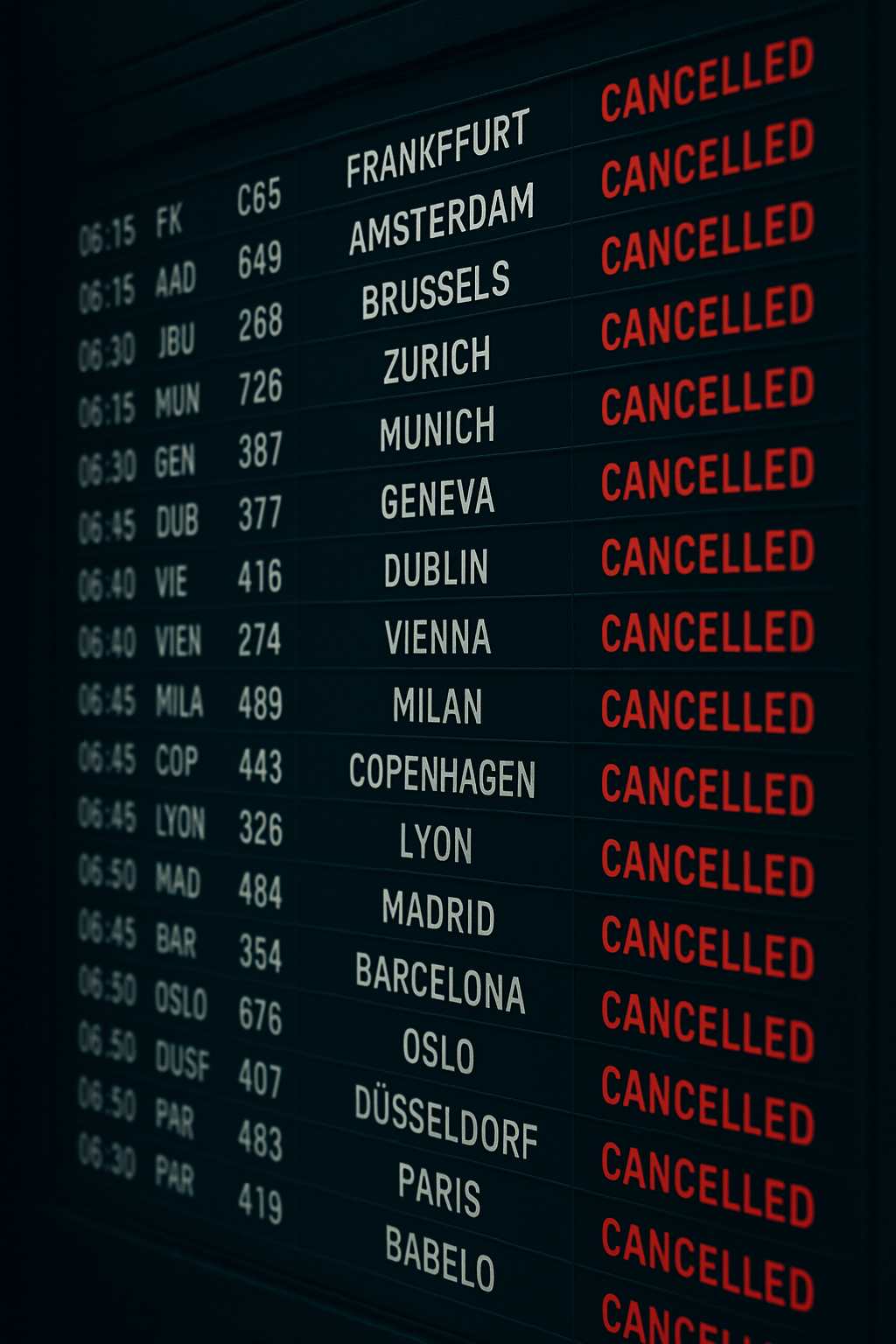
Introduction: European Airport Cyberattack Disruption
European Airport Cyberattack Disruption has become a stark warning about how a single digital incident can paralyze air travel across an entire region. When a cyberattack hit a third-party provider that runs check-in and boarding systems, Heathrow, Brussels, and Berlin airports were suddenly forced to abandon automated processes and switch to manual procedures, turning a routine travel day into chaos for thousands of passengers.
Manual Check-In Chaos at Major European Hubs
The attack disabled the software that usually issues boarding passes, prints baggage tags, and verifies passenger data in seconds. Check-in counters quickly turned into choke points as staff had to process every traveler by hand, inspecting documents, writing or manually entering details, and coordinating boarding without their normal digital tools. Lines snaked across Terminal 5 at Heathrow and through departure halls in Brussels and Berlin, with many passengers missing connections or having flights cancelled entirely. Airports and airlines urged travelers to check their flight status and arrive earlier than usual, but even those precautions could not fully offset the disruption.
Third-Party Systems: Aviation’s Hidden Weak Point
This incident highlights how deeply dependent modern airports are on external IT vendors. A compromise at a single service provider instantly cascaded across multiple countries, underscoring that cyber resilience is only as strong as the weakest contractor in the chain. While Frankfurt Airport remained unaffected, its relative stability simply underscored how different technical setups and better-segmented systems can limit the blast radius of a cyber event.
Suspected Russian Cyber Activity and Cisco Vulnerabilities
The disruption fits into a wider pattern of hostile cyber activity against critical infrastructure. Security agencies have previously reported that hackers linked to Russia’s cyber espionage units exploited vulnerabilities in outdated Cisco networking equipment that still underpins many global systems. Although investigators have not publicly confirmed the exact perpetrators in this case, the overlap between known tactics and the type of target raises serious concerns that European transport infrastructure is being probed and pressured as part of broader hybrid warfare.
Strengthening Cybersecurity for Future Air Travel
For passengers, the European Airport Cyberattack Disruption is an unwelcome reminder that even weekend trips depend on complex, vulnerable digital networks. For policymakers, airport operators, and airlines, it is a clear mandate to treat cybersecurity, vendor screening, network segmentation, and rapid incident response as core elements of aviation safety. Investing in redundancy, retiring outdated hardware, and rehearsing crisis protocols will determine whether the next cyberattack causes a temporary slowdown—or another continent-wide travel meltdown.











 English
  Ukrainian
  French
  German
  Spanish
  Chinese