

Tomahawk missiles for Ukraine are suddenly closer to becoming reality after US President Donald Trump said he has “nearly” decided to authorize their supply. Speaking in a White House broadcast, he stressed that before signing off he wants clear answers from Kyiv on how the long-range cruise missiles would be used and which targets they would strike. Trump cast his hesitation not as reluctance to arm Ukraine, but as a bid to avoid uncontrolled escalation with Russia while still keeping military pressure on the Kremlin.
Trump seeks control over escalation risks
Answering a reporter’s question, Trump said he had “sort of made a decision, pretty much” on the Tomahawks, but immediately added that he “has to ask” what Ukraine plans to do with them and where they intend to send them. The message was aimed both at allies and domestic audiences: Washington may be ready to unlock another tier of advanced weapons, yet the administration wants political cover in the form of strict assurances on targeting, framed as responsible escalation management rather than open-ended escalation.
Zelensky’s pitch: long-range leverage for peace
The push for Tomahawk missiles for Ukraine began at a closed-door meeting between Trump and Volodymyr Zelensky on the sidelines of the UN General Assembly in New York. There, Zelensky argued that high-tech, long-range systems would raise the cost of continued Russian aggression and increase the likelihood of a ceasefire. In his view, the ability to strike critical military targets deep behind Russian lines would help force Vladimir Putin to the negotiating table and create a more favorable balance of power for any eventual peace agreement.
PURL initiative and NATO delivery route
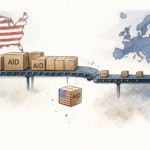
US Vice President Jay D. Vance later confirmed that Washington is actively considering Zelensky’s request, alongside similar appeals from several European partners, to make Tomahawks available to Ukraine. The most likely mechanism is the PURL initiative, under which the United States sells advanced weapons to NATO allies who then re-export part of their stocks to Ukraine. This pathway allows Washington to strengthen Kyiv’s long-range strike capacity while maintaining a layer of political and legal distance from direct transfers.
What Tomahawks would mean for Ukraine’s campaign
If approved, Tomahawk missiles for Ukraine would significantly expand Kyiv’s ability to hit high-value Russian targets far from the front line, from command hubs and logistics nodes to key infrastructure supporting the war effort. Supporters argue that such deep-strike options are essential to undermining Russia’s offensive capacity and making further aggression too costly. Critics warn that Moscow could use Tomahawk strikes as a pretext for new escalatory steps. Trump’s “near” decision therefore sits at the heart of a wider debate: whether empowering Ukraine with long-range tools is the fastest path to a negotiated peace, or a gamble that risks widening the conflict if not paired with clear political limits.






 English
  Ukrainian
  French
  German
  Spanish
  Chinese