
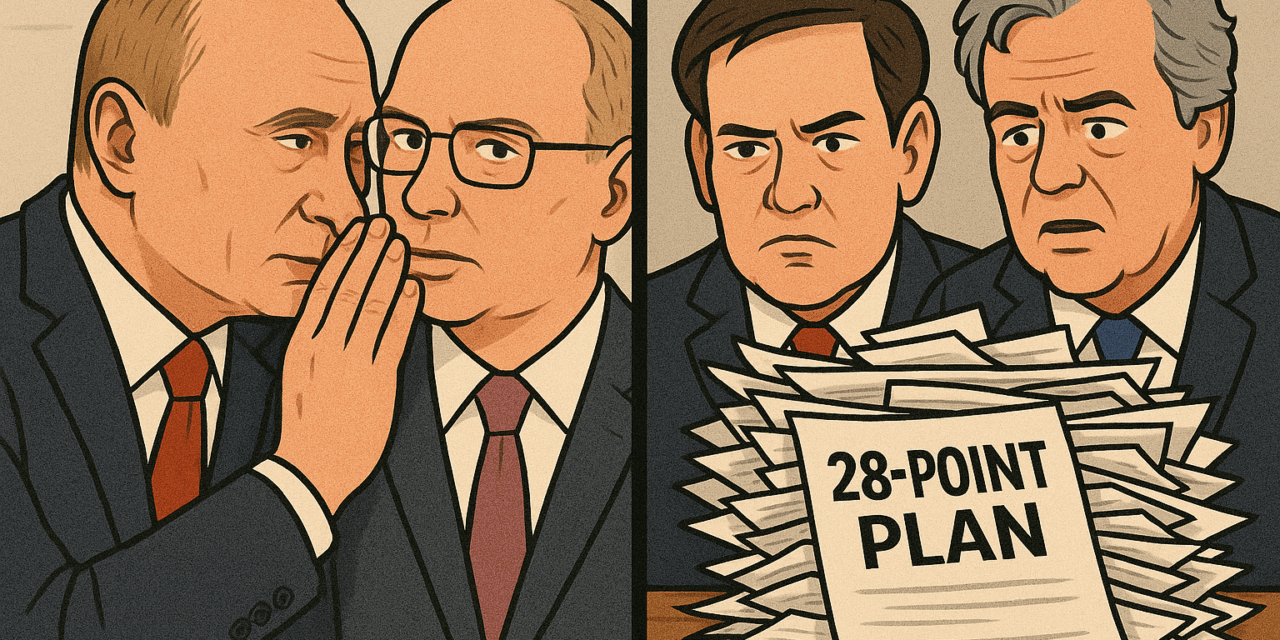
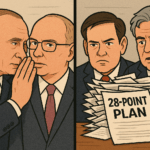
The unfolding story of the Dmitriev Trump peace talks raises a troubling question at the heart of US policy: was Washington really leading its own Ukraine diplomacy, or did a Kremlin-linked “money man” quietly shape the agenda? When Kirill Dmitriev, long known as Vladimir Putin’s financial emissary, flew into Miami for discreet meetings with presidential envoy Steve Witkoff, the visit stayed largely under the radar. Only later, as reports of a secret 28-point peace plan surfaced through outlets such as Axios (https://www.axios.com/) and The Telegraph (https://www.telegraph.co.uk/), did the scale of the controversy become clear.
A ‘peace plan’ that matched Moscow’s wish list
The leaked proposal stunned Kyiv’s supporters. The draft demanded that Ukraine give up the entire Donbas and accept Russia’s grip on Crimea, cap the size of its army, and accept a ban on NATO troops on its soil, while Russian assets would be unfrozen and Moscow would rejoin the G7. Analysts and insiders quoted by The Telegraph described the document as reading like a Russian wish list rather than a balanced negotiation framework (see also Reuters: https://www.reuters.com/). Many in Washington and Europe saw it as a unilateral concession package dressed up as peace.
How Dmitriev and Witkoff bypassed the system
What disturbed officials most was not only the substance, but the process. Dmitriev, under US sanctions, reportedly obtained a special waiver to enter the United States and meet Witkoff in Florida. According to subsequent reporting, large parts of the administration — including Secretary of State Marco Rubio and even Donald Trump himself — learned of the details late, after media leaks and congressional outrage. Witkoff’s quickly deleted social-media post thanking “K” for the plan deepened suspicions that the Kremlin’s envoy enjoyed outsized influence over the draft.
Information warfare and the battle to define ‘normal’
Experts like Keir Giles argue that the episode fits a classic Russian information-warfare pattern: inject a maximalist proposal into Western debate, then force everyone else to “fight back” from that starting point. By allowing a Russia-friendly blueprint to be framed as an American peace effort, the operation sowed confusion in the White House, widened rifts with European allies, and blurred responsibility for the plan’s most controversial demands.
Who really shaped the talks — Washington or Moscow?
As Rubio privately distanced himself, reportedly telling senators that the text looked like a Russian draft, Trump grew angry that his envoys had effectively declared the deal dead. The political damage, however, was already done. Allies questioned US reliability, Congress questioned internal oversight, and the public saw muddled messaging from the administration. In the end, the Dmitriev Trump peace talks highlight a deeper strategic vulnerability: when opaque channels and sanctioned intermediaries dominate diplomacy, it becomes increasingly hard to say whether peace plans reflect American interests — or Moscow’s design.



 English
  Ukrainian
  French
  German
  Spanish
  Chinese