
On April 3, 2023, launchers of the Bundeswehr’s Patriot air defense system were stationed on a snow-covered field near Miączyn, Poland. This deployment underscores the ongoing military support Ukraine receives from non-European Union sources, which is projected to reach at least $27 billion by 2026. This reliance highlights the EU’s dependence on American technology to bolster Kyiv’s defenses, as revealed by negotiating documents.
The European Union has committed to a substantial financial package, planning to allocate 60 billion euros ($70 billion) for Ukraine’s defense as part of a broader 90-billion-euro support package agreed upon in December. This unprecedented investment aims to rejuvenate the EU’s military industrial base while ensuring the Ukrainian military’s operational continuity through 2026.
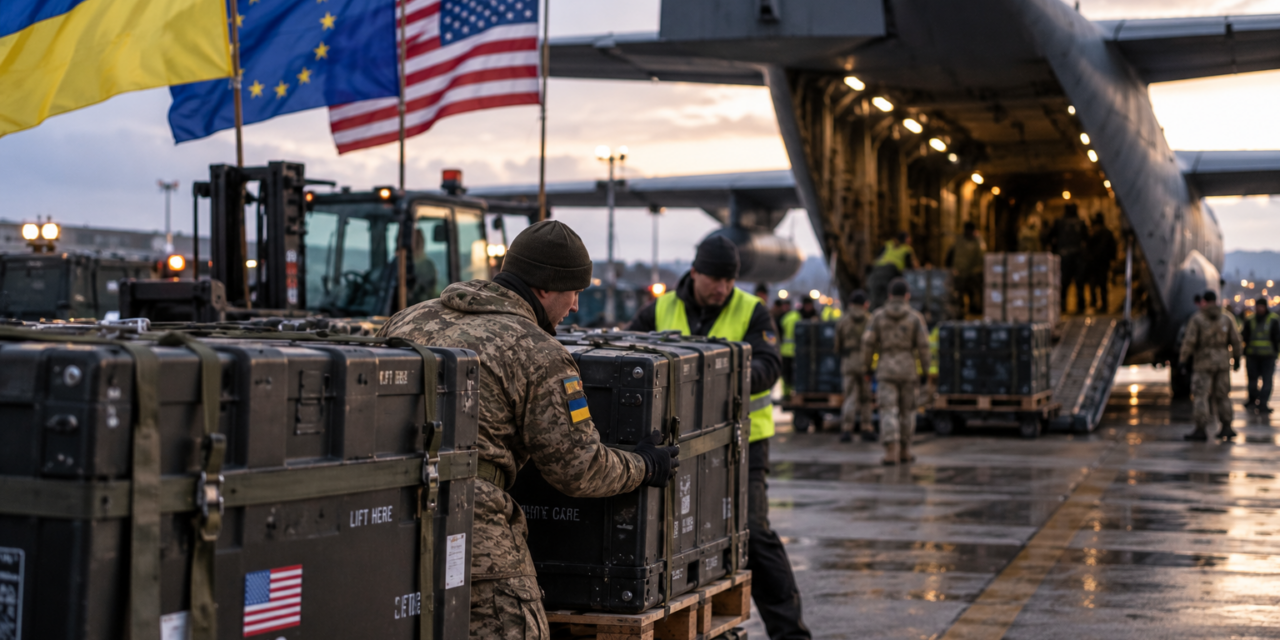
Despite these efforts, the EU struggles to match the production speed and technological capabilities of U.S.-made systems, including critical air defense technologies like the Patriot systems, and munitions for Ukraine’s F-16 fleet. Germany and the Netherlands advocate for directing up to a quarter of the defense funds towards non-EU weapons, primarily from the United States, to secure these essential capabilities.
The EU embassy in Kyiv has neither confirmed nor denied the $27 billion figure, emphasizing its role as Ukraine’s largest and most stable financial partner. Meanwhile, Ukraine’s new Defense Minister, Mykhailo Fedorov, has not commented on the matter.
Ukraine’s reliance on U.S. weaponry exposes the challenging position of EU countries, which depend on American technology to support Kyiv. This situation is further complicated by U.S. President Donald Trump’s controversial statements regarding Greenland, which have strained the transatlantic alliance.
In January, Trump announced tariffs on several European countries following their support for Denmark against U.S. threats to annex Greenland. In response, the EU is reportedly preparing tariffs on 93 billion euros worth of goods. The EU Embassy in Kyiv declined to comment on potential policy adjustments but affirmed its commitment to working with the U.S. to provide Ukraine with robust security guarantees.
This transatlantic tension arises at a critical juncture for Ukraine, which is enduring its harshest winter in years with temperatures plummeting below minus 20 degrees Celsius. Russian missile and drone strikes have devastated Ukraine’s civilian energy infrastructure, pushing the nation to the brink of a humanitarian crisis.
President Zelensky, on January 14, urged Ukraine’s allies to expedite the delivery of air defense systems and interceptors, revealing that some systems had exhausted their ammunition. Although a significant air defense aid package arrived on January 16, Russia is expected to continue large-scale strikes, further straining Ukraine’s air defense resources.
Ukraine has consistently emphasized the irreplaceability of American-made Patriot systems, particularly the advanced Patriot PAC-3 interceptors, which are crucial against ballistic missiles. While the French-Italian SAMP/T system offers similar capabilities, production has stalled since Russia’s full-scale invasion in 2022, and it has not matched the effectiveness of the Patriot PAC-3 in real-world conditions.
Moreover, Ukraine heavily relies on U.S. signals intelligence and satellite capabilities, which its European allies cannot match. According to EU estimates from November 2025, Ukraine will require 135 billion euros ($155 billion) in military and budgetary assistance over 2026–2027. The December agreement, termed the Ukraine Support Loan, covers two-thirds of this amount.
This report is made possible by the support of 35,000 members who ensure our journalism remains accessible to all. Their backing allows us to continue delivering critical news coverage.
Read more at kyivindependent.com








 English
  Ukrainian
  French
  German
  Spanish
  Chinese