
Russia is expanding its military units along NATO’s borders and giving them combat experience in Ukraine, and could use them as hubs for a future conflict with the alliance, Lithuanian intelligence warned on March 6, 2026, in its annual national threat assessment. The report was presented by Lithuania’s State Security Department and the Second Department of Operational Services.
“The security situation in Lithuania and the region is directly dependent on the course of Russia’s war against Ukraine,” the assessment said. As long as Russia remains bogged down in Ukraine, its ability to threaten other countries is limited.
Three scenarios for a Russian threat
The assessment sets out how quickly Russia could be ready for a conflict in the Baltic Sea region:
- If a temporary ceasefire is reached in Ukraine: ready for a limited conflict in three to five years.
- If the war continues: ready for a limited conflict in six to 10 years.
- If a peace treaty is signed and Western sanctions are lifted: ready for a limited conflict in one to two years and a large-scale conflict with NATO in six to 10 years.
In the last scenario, Russia could field an army 30 to 50 percent larger than before the war, with modern equipment and fully restored stockpiles. Lithuanian intelligence warned that the Kremlin might act on the miscalculation that NATO could not respond in time, relying on nuclear deterrence as a safeguard.
Brigades becoming divisions
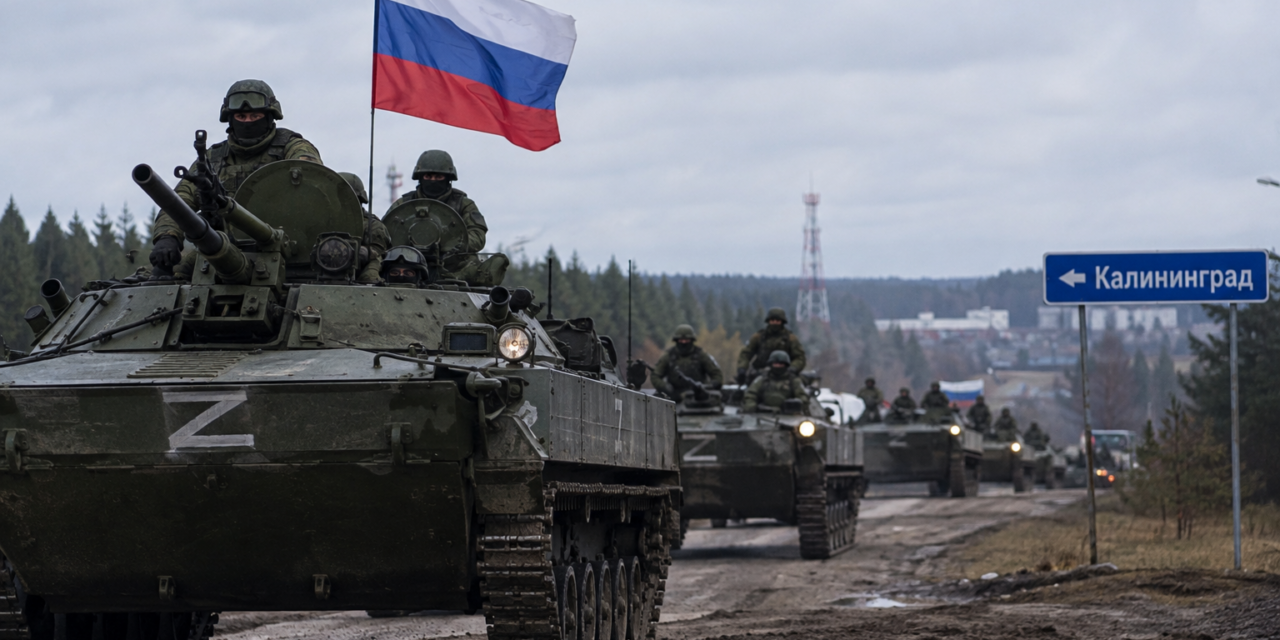
Russia is carrying out military expansion plans first announced in December 2022, converting brigades along NATO’s eastern borders into divisions and creating new formations. In Kaliningrad, a marine brigade is being expanded into a division. For now, Kaliningrad’s ground forces are weakened because most troops and equipment have been sent to Ukraine, and many new units remain understaffed.
Industry, China and sabotage
Russia’s war industry now meets at least its minimum needs in all weapons categories, and the assessment warned of a future “surplus of weapons that could be used in conflicts around the world.” China has helped reduce Russia’s reliance on Western technology, although Moscow remains dependent on Western electronics.
The report also said Russian military intelligence (GRU) continues to plan sabotage and assassination operations, with several dozen thwarted in Western countries over the past three years, while the FSB tries to recruit travelers at border crossings with Kaliningrad.
Sources
Image note: The featured image was generated by AI based on the content of this article. It is an illustration, not an actual photograph of the people, places or events described.