
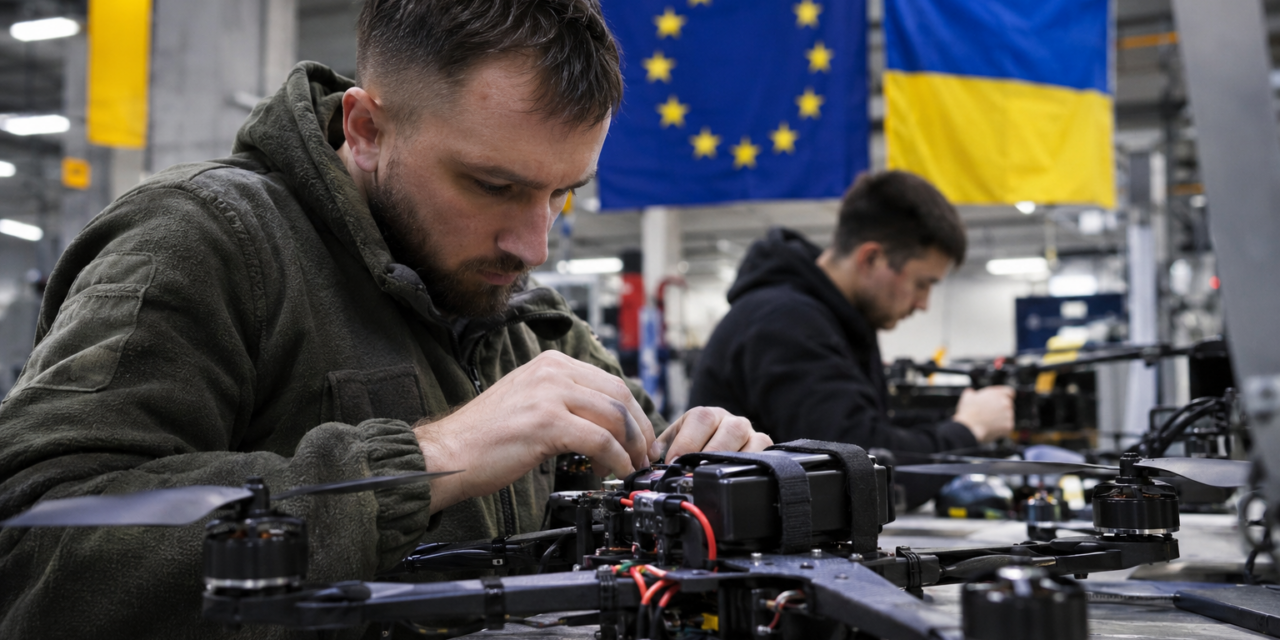
The European Union is moving ahead with a €6 billion Drone Alliance with Ukraine to jointly produce millions of drones, as Brussels prepares for a smaller US military role in Europe. European Commissioner for Defence and Space Andrius Kubilius outlined the plans on January 28, 2026, describing Europe as a “sleeping giant” in defense.
Millions of drones, funded by Russian assets
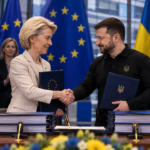
The alliance will fund joint EU-Ukraine production of drones for Ukraine, with part of its €6 billion budget coming from frozen Russian assets. European Commission President Ursula von der Leyen first announced the initiative in her State of the Union address in September 2025, saying the money would be advanced through the G7 loan backed by Russian assets. “Ukraine has ingenuity. Now it needs scale,” she said at the time, noting that Ukrainian drones account for more than two-thirds of Russian equipment losses.
The EU is also working with Kyiv on priorities under the European Defence Industrial Programme (EDIP), with a particular focus on missile production.
Preparing for a US shift
Kubilius linked the push to Washington’s new National Defense Strategy, which prioritizes the Indo-Pacific and the Western Hemisphere and is likely to reduce the US presence in Europe. He said the EU should build greater defense autonomy together with NATO and Ukraine, and named the areas where Europe remains critically dependent on the United States: strategic airlift, air-to-air refueling, missile defense, space-based intelligence and command and control.
He stressed that defense remains the responsibility of member states, with the Commission’s role being to support them.
Ukraine inside SAFE
The drone plan sits alongside the EU’s €150 billion Security Action for Europe (SAFE) program, launched in 2025. The Commission has approved 16 national investment plans, with three more under review. Ukraine has been recognized as a “quasi-member” of SAFE, allowing Ukrainian makers of ammunition, air defense systems, drones, logistics and cyber defense to bid on tenders, join supply chains and receive investment for local production.
Sources
Image note: The featured image was generated by AI based on the content of this article. It is an illustration, not an actual photograph of the people, places or events described.