
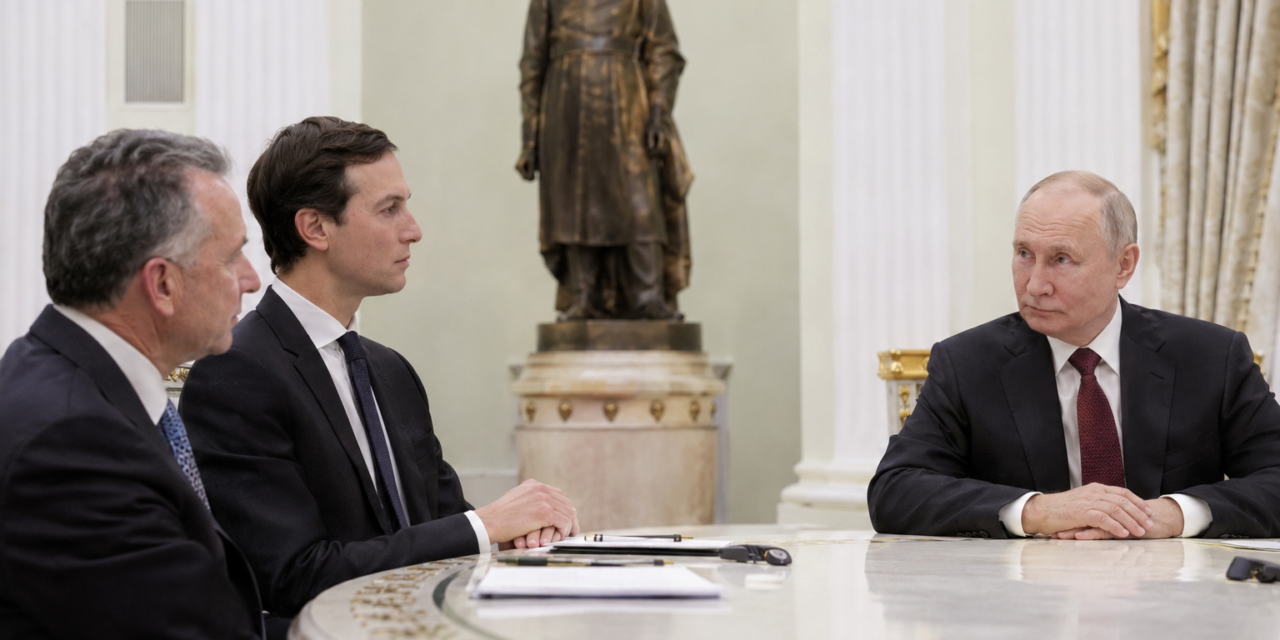
The Kremlin is showing no sign of easing its demands on Ukraine after a long night of talks with US President Donald Trump’s envoys. Vladimir Putin met special envoy Steve Witkoff and Trump’s son-in-law Jared Kushner in Moscow on Tuesday, December 2, 2025. The meeting lasted about five hours and ended without what Russian officials called a “compromise solution.”
A late start and no breakthrough
The meeting began roughly three hours behind schedule, at around 8 p.m. Moscow time, and ran past midnight. Putin was joined by his foreign policy aide Yuri Ushakov and Kremlin special envoy Kirill Dmitriev.
Ushakov described the talks as “useful, constructive and highly substantive,” but said they had not brought a deal any closer. According to Ushakov, the two sides did not work through specific wording. Instead they discussed the “essence” of the White House peace framework, including territory. He said some points were acceptable to Moscow, others drew criticism, and Putin openly expressed a negative view of some proposals. “A lot of work” remained, he added. Dmitriev called the meeting “productive.”
The US framework had already been reworked in the days before the Moscow visit. US and Ukrainian officials discussed it in Florida the previous Sunday, and over two weeks Washington cut the original 28-point plan to 19 points. Reports said the document still contained points Kyiv considers unacceptable, including handing Crimea and the Donbas to Russia, writing a ban on NATO membership into Ukraine’s constitution, and sharply reducing the size of its armed forces.
US Secretary of State Marco Rubio told Fox News that territory remained central for Putin, with Russian forces still fighting for the roughly 20% of Donetsk region Moscow does not control. Despite some progress, he said, “we’re still not there.”
Analysts: the goal was pressure on Kyiv, not peace
Analysts quoted by The Washington Post said Moscow’s real aim was to persuade the Americans to push Ukraine into accepting Russian conditions, which critics describe as capitulation in all but name.
“Putin is happy with the war’s progress,” said Alexander Baunov of the Carnegie Russia Eurasia Center. He said the Russian leader changes into military uniform about three times a month and personally works over maps with his generals.
Tatiana Stanovaya of the Carnegie Center said the Kremlin sees US pressure on Kyiv as the only “viable route to peace.” Vladimir Pastukhov, an honorary professor at University College London, said Putin is not seeking peace at any price and will end the war only on his own terms. “The terms of this peace would be unfair, humiliating for Ukraine, and insulting to Europe,” he said.
Threats aimed at Ukraine and Europe
The talks came as Putin threatened to cut Ukraine off from the Black Sea and said Russia was ready for war with Europe “right now, if Europe starts it.” Dutch Foreign Minister David van Weel called the remarks “horrible” and said Europe should treat them as “a serious warning” to strengthen its defenses.
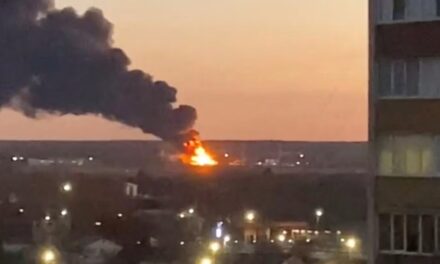
For Ukrainians, the outcome means more of the same: continued fighting at the front and continued Russian strikes on cities. Witkoff and Kushner had been expected to brief President Volodymyr Zelenskyy in Brussels after the Moscow meeting, but reports said that meeting was called off and the US officials were returning to Washington.
Sources
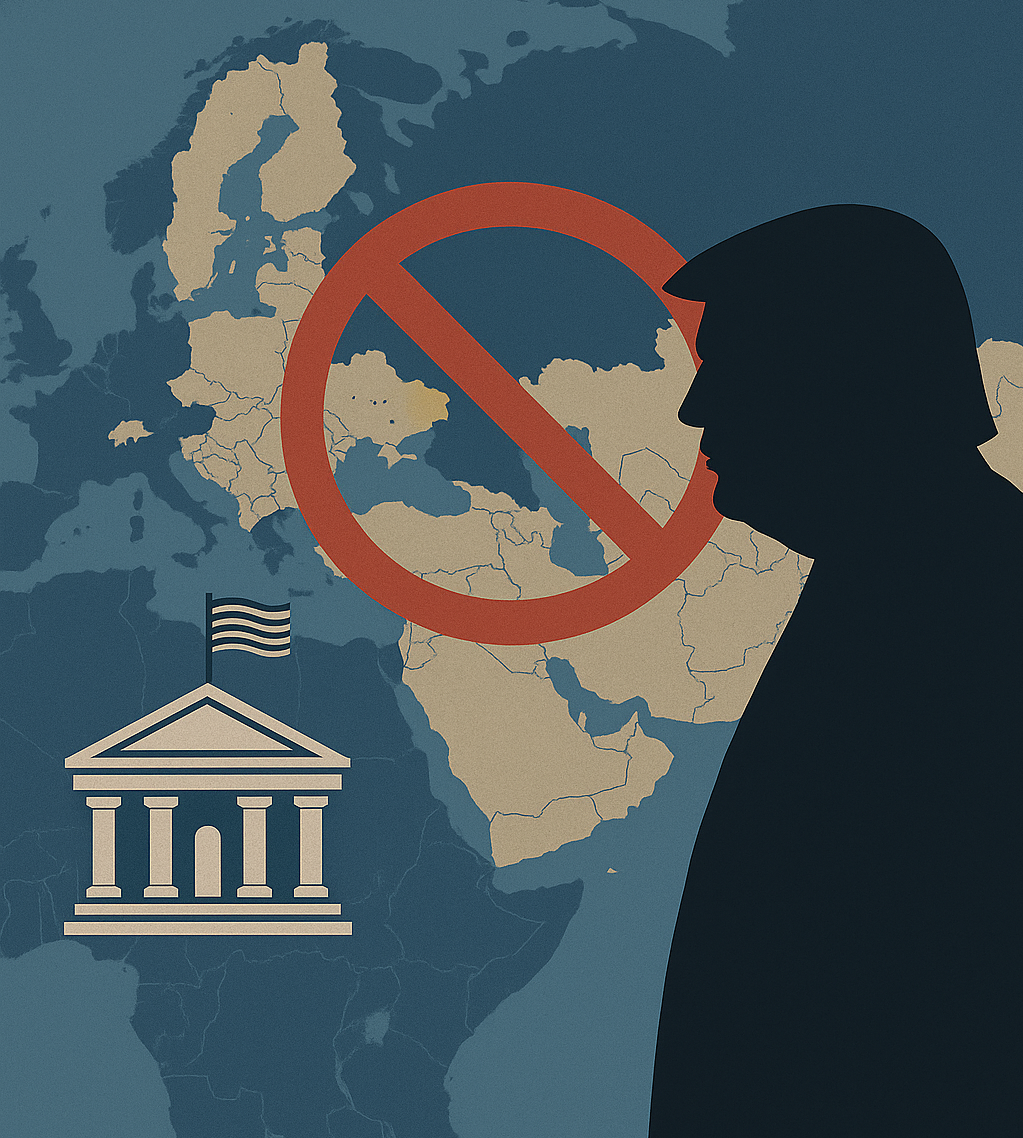
Image note: The featured image was generated by AI based on the content of this article. It is an illustration, not an actual photograph of the people, places or events described.