
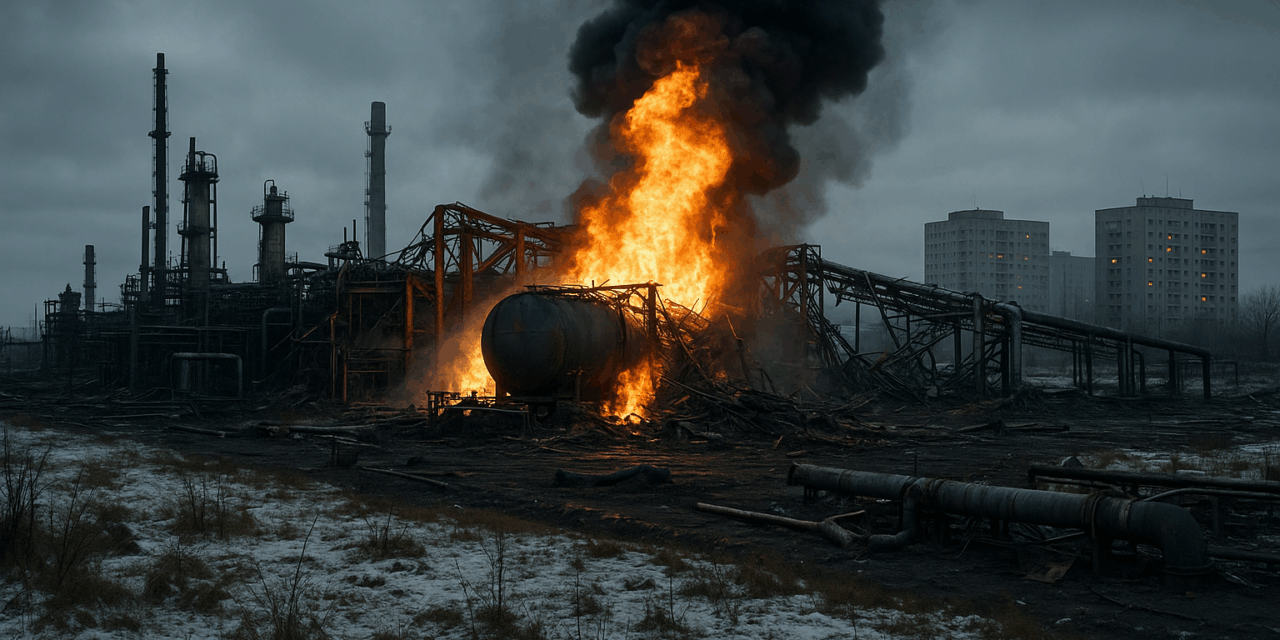
Russia strikes Ukraine gas production just weeks before the winter heating season, knocking out around 60% of the country’s domestic output and pushing millions of households to the brink of a new energy crisis. The 3 October missile and drone barrage on facilities in the Kharkiv and Poltava regions turned a fragile energy balance into a critical vulnerability, forcing Kyiv to divert scarce resources from defense and reconstruction into emergency fuel imports.
Energy lifeline shattered before heating season
Before the latest wave of attacks, Ukraine’s gas fields and infrastructure could cover almost all domestic demand, producing about 19 billion cubic meters of gas per year. That capacity has now been cut more than in half. Gas is the backbone of Ukraine’s district heating systems and a key backup for electricity generation, so the sudden loss hits both warmth and power at once. Officials estimate that Kyiv will need to spend about €1.9 billion on extra imports this winter simply to keep radiators and lights on.
President Volodymyr Zelenskyy has framed the strikes as part of a deliberate Russian strategy to weaponize cold and fear. By systematically targeting gas fields and production hubs, Moscow aims to deepen civilian hardship, drain Ukraine’s budget, and pressure the government into concessions. Zelenskyy stresses that Ukraine must now secure enough financing to buy replacement gas on the international market so that “people have gas” even if local extraction remains under fire.
Costly imports and pressure on Europe’s gas market
Energy Minister Svitlana Grynchuk notes that the final import volumes will depend on repair speed and whether Russia keeps hitting energy sites. Current estimates suggest Ukraine may need to bring in up to 4.4 billion cubic meters of gas by the end of March, roughly one-fifth of its annual consumption. Naftogaz CEO Sergii Koretskyi has launched talks with G7 governments and the IMF to unlock both financial and technical support.
The shock to Ukraine’s domestic output also sends ripples through Europe’s gas market. If Ukraine’s demand for imported gas jumps while storage levels on the continent remain below average, a colder-than-normal winter could quickly tighten supplies, drive prices higher, and renew concerns over energy security across the EU. In this sense, Russia’s latest assault on Ukraine’s gas sector is not only an attack on one country’s infrastructure, but another attempt to destabilize the wider European energy system.








 German
  English
  Ukrainian
  French
  Spanish
  Chinese