
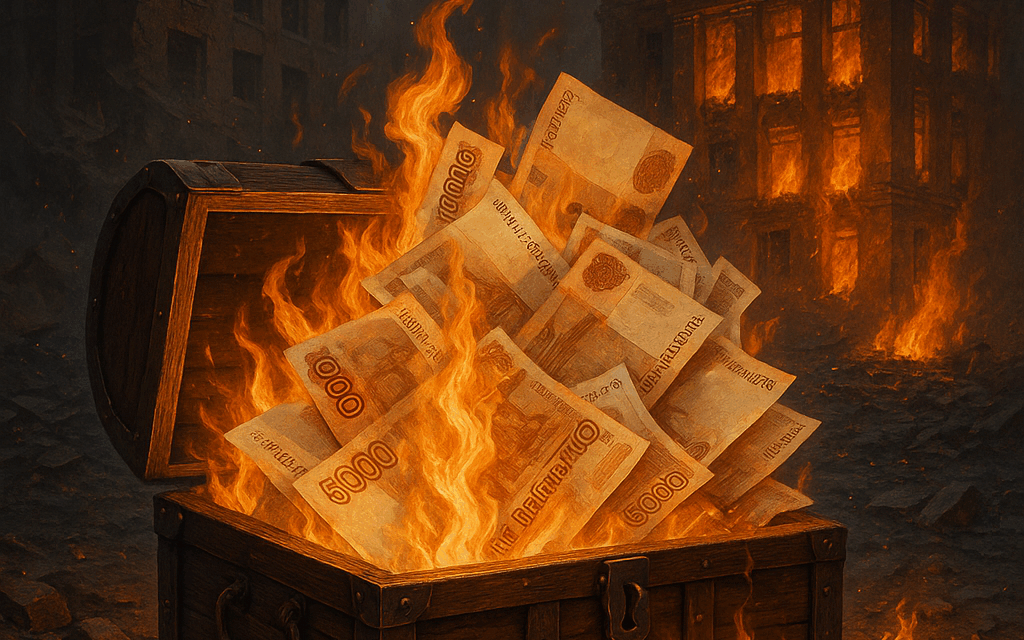
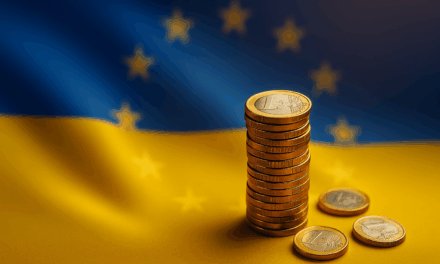
Russia’s war chest crisis is becoming one of the most decisive factors shaping the Kremlin’s ability to continue its full-scale invasion of Ukraine. As sanctions tighten, energy profits fall, and labor shortages deepen, Russia is approaching a moment where its liquid financial reserves could run dry by Christmas. This looming fiscal stress is not about a sudden economic collapse but a slow, grinding decline that limits Moscow’s capacity to fund the war at its current pace.
Inflation, stagnation, and exhausted reserves
Russia’s official inflation stays near 10%, while future inflation expectations hover around 13%. In July, the Central Bank cut interest rates from 20% to 18%, a move meant to spark growth but one that worsened the credit crunch. Despite claims of strong economic performance in 2023–2024, much of that growth was inflated by revived Soviet-era military factories and distorted state pricing. In 2025, growth has slowed sharply as sanctions limit imports and pressure state finances.
Russia’s National Wealth Fund—its only remaining source of liquid financing—has dropped from $135 billion in January 2022 to just $35 billion by May 2025. At Russia’s current deficit level, this fund may be depleted within months. Even China refuses to openly finance Russia due to fear of secondary sanctions
(Source: https://www.reuters.com/world/china/chinas-banks-hold-back-russia-risk-2024-05-18/).
Declining oil revenues and shrinking export power
Energy exports once accounted for half of Russia’s federal revenues, but sanctions have cut total exports by 27% since 2022. The EU now caps Russian oil at $47.6 per barrel, while nearly 600 “shadow fleet” tankers face sanctions. Reduced oil income forces the Kremlin to shrink federal spending from 20% of GDP to around 17%, with military cuts expected in 2026—an alarming sign during wartime.
Corruption, labor drain, and elite fractures
Internal instability amplifies the pressure. Russia ranks 154th on Transparency International’s Corruption Perceptions Index
(Source: https://transparency.org/en/cpi/2023). Senior officials are being purged or jailed, and about one million citizens—mostly young, skilled workers—have fled since mobilization in 2022. This severe labor shortage restricts production and drives wage inflation.
A narrowing future
While Ukraine spends half its GDP on defense due to an existential threat, Russia spends only 7%, constrained not by capacity but by political risk. As reserves shrink and structural weaknesses accelerate, Russia’s room to maneuver continues to close. The Kremlin may not seek peace yet, but the economic walls are tightening around Vladimir Putin.


 German
  English
  Ukrainian
  French
  Spanish
  Chinese