
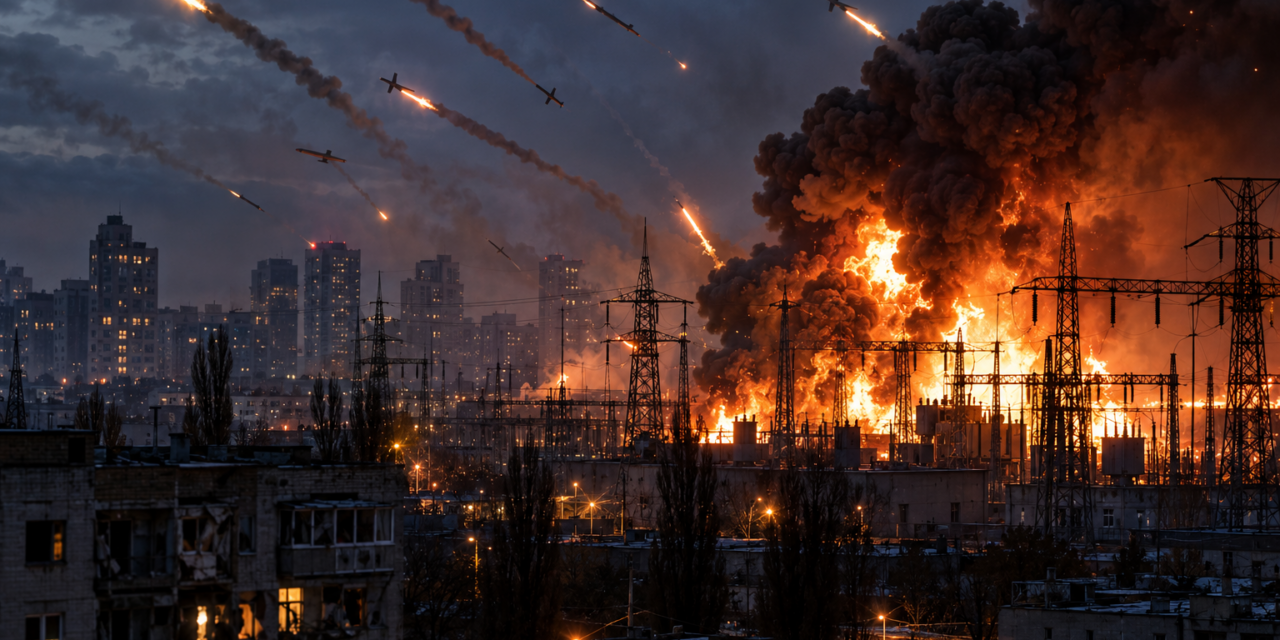
On September 30, Russia launched a renewed offensive against Kyiv’s energy infrastructure, marking one of the most prolonged attacks on the Ukrainian capital since the onset of the full-scale conflict. As autumn sets in, the assault has rekindled fears reminiscent of last winter’s devastating strikes on Ukraine’s power grid.
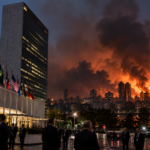
Air raid sirens echoed across Kyiv for over 20 hours, enveloping the city in thick smoke due to Russia’s relentless bombardment. Prime Minister Serhii Koretskyi noted that while attacks on energy infrastructure have been frequent since summer, this was the first massive and combined assault since the last heating season ended.
Ukraine’s largest private energy company, DTEK, reported significant damage to energy infrastructure, resulting in blackouts. Although power was restored to 8,000 customers on Kyiv’s left bank, emergency crews remain active. State-owned grid operator Ukrenergo also reported outages in Kyiv and surrounding regions, advising residents to limit the use of high-power appliances.
President Volodymyr Zelensky emphasized that Kyiv’s energy infrastructure was the primary target of the Russian attacks. He stressed the importance of interceptor missiles in saving lives, especially as winter approaches, to thwart Russia’s reliance on ballistic and drone terror.
The Trypilska Thermal Power Plant in Kyiv Oblast sustained damage, confirmed by state-owned power producer Centrenergo. CEO Serhii Isachenko stated that assessing the equipment’s condition and determining repair needs are priorities once the security situation permits.
Emergency power shutdowns disrupted public transport in Kyiv, with electric ground transport suspended in several districts. The Kyiv City State Administration reported tram service suspensions due to power outages.
The attacks resulted in casualties, with two women killed in the Sviatoshynskyi district and another person in Solomianskyi district. Seven people were injured during the overnight assaults, and numerous explosions were reported throughout the city.
In the Podilskyi district, a fire broke out in a non-residential building and a warehouse. Debris from the attacks also fell onto the grounds of a western embassy in the Shevchenkivskyi district.
Ukrainian lawmaker Volodymyr Ariev reported a Russian drone crash at a children’s playground in the Obolonskyi district, which fortunately did not explode. The State Emergency Service advised residents to keep windows closed due to lingering smoke.
Later that evening, additional drone attacks caused further damage, including fires at warehouses and a cafe. In Kyiv Oblast, a child was found dead under the rubble of a home in Vyshhorod, with other injuries reported.
Kyiv Oblast Military Administration head Tymur Tkachenko detailed damage to vehicles, warehouses, and homes across various districts. An educational institution in Bila Tserkva was also affected.
Russia’s intensified attacks on Kyiv since August have included relentless drone strikes, aiming to exhaust Ukrainian air defenses. On September 30, Kyiv experienced a record air raid alert lasting over 20 hours.
Ukraine’s Air Force reported intercepting 254 of 285 drones launched by Russian forces, alongside missile attacks. Despite these efforts, Russian drones continued to target Kyiv and surrounding areas into the night.
Lesen Sie mehr unter kyivindependent.com







 German
  English
  Ukrainian
  French
  Spanish
  Chinese