
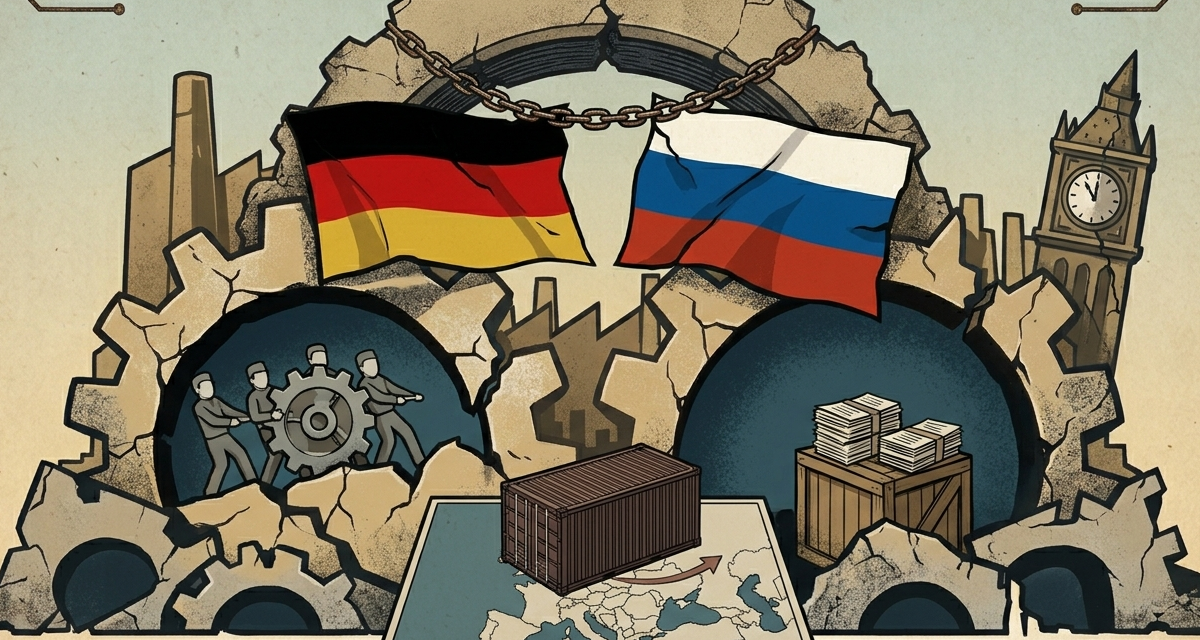
In Lübeck, Germany, a four-year investigation culminated in the arrest of Nikita S., a businessman suspected of supplying the Russian military with European technology. The probe revealed a sophisticated smuggling operation that utilized a German trading firm, Global Trade, to bypass Western sanctions. Documents seized during the raid exposed how dual-use components were rerouted through Turkey into Russia, forming the backbone of support for the Kremlin’s war efforts in Ukraine.
The investigation uncovered how Global Trade transformed from a legitimate business into a covert procurement arm for Moscow. The company, before facing sanction restrictions, directly exported to Russia. Post-sanctions, it adapted by using a series of shell companies and front operations to mask its transactions. Kolovrat, another Russian entity, was identified as the operational lynchpin, directing the illegal trade from within Russia.
The trading network was complex, with companies in Germany appearing authentic to suppliers but ultimately serving Russian military interests. The investigation revealed that many of the goods, such as microcontrollers and oscilloscopes, had dual uses, capable of advancing both civilian and military projects. A Turkish intermediary, MR Global, played a critical role by acting as a transit point, promising swift delivery to Russian end-users.
Findings from Germany’s Federal Intelligence Service gave prosecutors a look into the functioning of this clandestine network. With clear evidence from intercepted communications and matched trade records, charges of systematic violation of export controls are being pursued against several individuals involved, including Eugen R., Daniel A., and Boris M. This incident underscores the challenges in enforcing international sanctions and highlights the agility with which some entities circumvent such measures, ensuring the ongoing flow of critical technology to Russia’s military apparatus.
Source : POLITICO



 French
  English
  Ukrainian
  German
  Spanish
  Chinese