
Russia can already fire up to 77 missiles at Ukraine in a single salvo and is working to raise that number to 200, according to Robert “Magyar” Brovdi, commander of Ukraine’s Unmanned Systems Forces. His warning, given in an interview with the Associated Press published on August 10, 2026, came as the UN human rights monitoring mission recorded July as the deadliest month for Ukrainian civilians since the spring of 2022.
“Even if they only manage half of that, it will all be flying at us,” Brovdi said. The AP was unable to independently verify his figures.
Ballistic and cruise missiles combined
Some early reports described the 77-missile figure as ballistic missiles only. Brovdi later clarified that it covers both ballistic and cruise missiles launched from a range of platforms, including ships and aircraft, and blamed the confusion on a translation error. He added that the 200-missile goal “does not refer exclusively to ballistic missiles.”
For comparison, the largest single-night Russian attacks so far have involved a few dozen missiles, well below the salvo size Brovdi described.
Patriot shortage leaves gaps in Ukraine’s defenses
Ballistic missiles are Ukraine’s most serious air defense weakness. The US-made Patriot is the only system in Kyiv’s arsenal that reliably intercepts them, and its interceptor stocks are close to exhausted. Only a handful of countries can produce such interceptors.
The consequences are visible in the numbers. Ukrainian air defenses shot down 29 of the 195 ballistic missiles Russia fired in July, roughly 15 percent, while another 40 failed on their own. During mass barrages, dozens of warheads reach their targets, which the UN mission linked to July’s sharp rise in civilian casualties.
Russian factories running ahead of plan
Ukrainian military intelligence (HUR) says Russia’s arms industry is outpacing its own targets. Deputy intelligence chief Vadym Skibitskyi said production of the main missile types is running 10 to 20 percent above plan. According to figures he cited, July output reached 140 percent of target for the Kh-101 cruise missile, 111 percent for the Kalibr and 200 percent for the Kh-35. He said a pause in Russian strikes is unlikely.
Drone production is also climbing. Skibitskyi said Russia planned to assemble 11,000 strike drones in August, including Geran-1 through Geran-5 models, the Harpia and several Gerbera variants. Output dipped slightly in July as factories retooled for the jet-powered Geran-4 and Geran-5, which are faster and require different interceptors or short-range air defense to stop.
Brovdi said the share of jet-powered Shahed-type drones in Russian attacks has grown two and a half times in recent weeks, and in one recent attack they made up half of all drones launched.
Taking the fight to Russia’s missile plants
Brovdi also pointed to Ukraine’s growing ability to hit targets deep inside Russia and in occupied Crimea, arguing that long-range strikes on Russian missile production facilities are one of the most important ways to blunt the threat. With Russia building more missiles and faster drones and launching them in bigger waves, Ukraine’s air defense network remains under heavy strain.
Sources
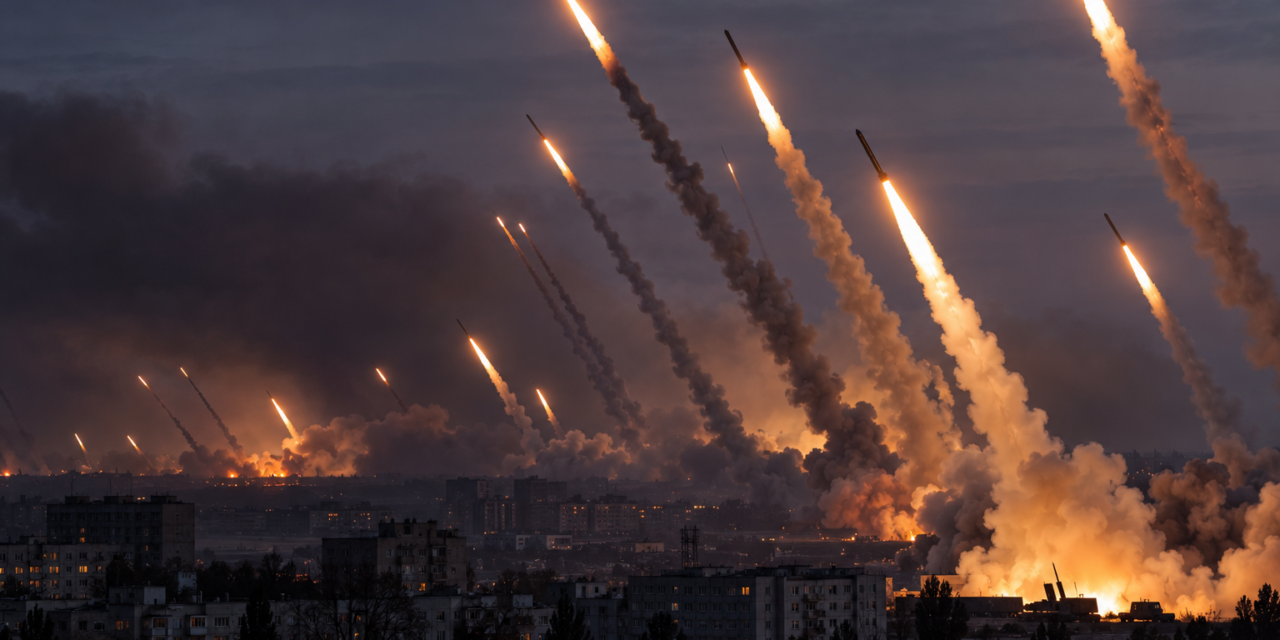
Image note: The featured image was generated by AI based on the content of this article. It is an illustration, not an actual photograph of the people, places or events described.