
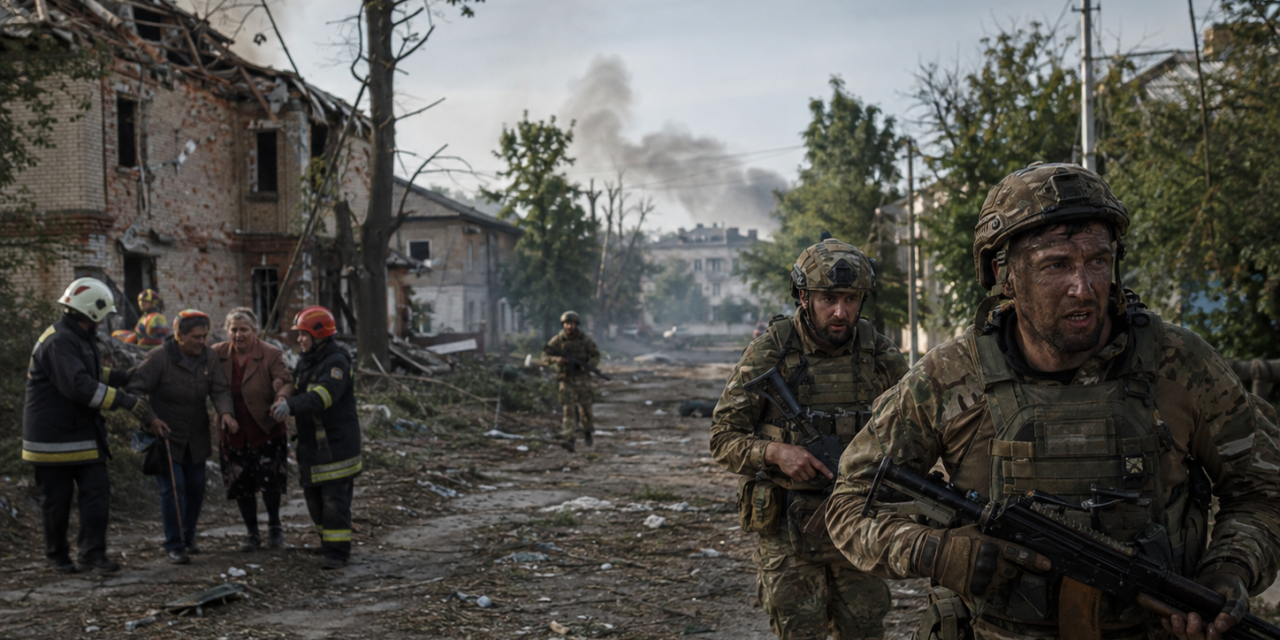
In August 2026, Russian military operations in Ukraine showed a marginal increase in the rate of advance. However, the Spring-Summer offensive failed to achieve significant operational breakthroughs or rapidly collapse Ukrainian defenses. Russian forces managed to consolidate positions or seize approximately 90.35 square kilometers, averaging 2.91 square kilometers per day. Including infiltrations, the total area affected was about 123.53 square kilometers, with a daily pace of 3.98 square kilometers.
The primary territorial gains were in the Fortress Belt area of Donetsk Oblast, yet these were limited to marginal tactical achievements. Russian forces have not completed the seizure of Kostyantynivka, maintaining a presence in 72.23 percent of the settlement. The current pace of Russian advances is significantly slower than the same period in 2025, when 505.55 square kilometers were seized.
Ukrainian forces continued their counteroffensive, notably in the Lyman and Oleksandrivka directions, liberating at least 129.81 square kilometers. This figure is likely conservative, as further evidence may reveal greater gains. The Institute for the Study of War (ISW) will update its assessments as more data becomes available.
Russian forces suffered high casualties for the second consecutive month, with 42,020 casualties reported in August 2026. This reflects an average of 340 casualties per square kilometer of territory seized or infiltrated. Russia’s volunteer recruitment system struggles to replace these losses, raising questions about the sustainability of their offensive tempo.
On the geopolitical front, senior German officials attributed an August 5 drone attack on Leipzig/Halle Airport to Russia. The attack involved tactics consistent with Russian operations, including the use of drones with explosive payloads. This incident is part of a broader Russian campaign to test Western responses and set conditions for future threats against NATO.
In response to ongoing threats, Ukrainian Commander-in-Chief Major General Mykhailo Drapatyi is establishing new operational commands to defend Donetsk Oblast. This includes formations under Brigadier Generals Andriy Biletsky and Denys Prokopenko, tasked with halting Russian advances.
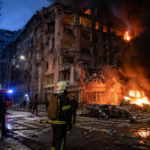
Russia has shifted its strike tactics, deploying jet-powered drones to maximize civilian harm. These drones are more challenging to intercept, with a lower interception rate compared to piston-engine drones. Russia’s use of jet-powered drones increased significantly in August 2026, despite a decrease in the total number of long-range drone strikes.
President Vladimir Putin has expanded the Federal Protective Service to enhance security for himself and senior officials, amidst increased threats and assassination attempts. Additionally, a reshuffle within Russian law enforcement agencies suggests preparations for potential mobilization following the State Duma elections.
Meanwhile, Ukrainian forces continue their long-range strike campaign against Russian assets, targeting oil refineries and military sites. Recent strikes include the Novatek Ust-Luga oil export terminal and a drone facility in Oryol Oblast.
Read more at understandingwar.org



 English
  Ukrainian
  French
  German
  Spanish
  Chinese