
Ukraine’s growing use of medium-range drone strikes, hitting targets roughly 30 to 180 kilometers behind the front line, is dealing a double blow to Russia’s war effort, commanders and analysts said in May 2026. By knocking out air defenses and supply routes, the strikes are both slowing Russia’s ground offensive and clearing the way for long-range attacks on oil refineries and military sites deep inside Russia.
“The role of middle strikes is currently decisive,” said Robert Brovdi, commander of Ukraine’s Unmanned Systems Forces. He said no more than three drones are typically needed per confirmed target destroyed, and his forces claim to have destroyed at least 129 Russian air defense systems in occupied areas this year, a figure that could not be independently verified.
A fast-growing capability
President Volodymyr Zelenskyy said mid-range strikes had doubled compared with March and quadrupled since February. In April alone, Ukrainian forces carried out more than 160 such strikes at distances of 120 to 150 kilometers, according to the Defense Ministry.
Priority targets include Russian radars and air defense systems such as Buk, Tor and Pantsir, along with large vehicles and logistics hubs. “The farther you pull back, the more you complicate logistics,” said Illia Mashyna, commander of the 431st Separate Unmanned Aircraft Systems Battalion. Drone units now feed frontline lessons back into their systems within days, and an engineer said mid-range strikes have gone from a one-off capability to a routine part of operations.
Opening the door to deep strikes
Justin Bronk of the Royal United Services Institute (RUSI) said deep strikes force Russia to pull air defenses away from the front, which in turn makes mid-range attacks easier. Ukraine’s long-range campaign has caused the most extensive damage to Russian oil infrastructure since 2022, hitting facilities in Tuapse, the Ryazan refinery, the NORSI refinery and a site in Perm about 1,500 kilometers from the border. Russia cut oil output in April after attacks on ports and refineries.
Russia’s advance slows
Russia’s battlefield advance is now its slowest since 2023. The Institute for the Study of War attributes this partly to mid-range strikes, along with fortifications and terrain in Donbas. Russian troops have also faced communication problems since their use of Starlink was restricted.
Analysts caution that the strikes alone will not decide the war. Emil Kastehelmi of the Black Bird Group said Russia will have to adapt, but added that he does not believe Ukraine’s mid-range campaign has reached its peak.
Sources
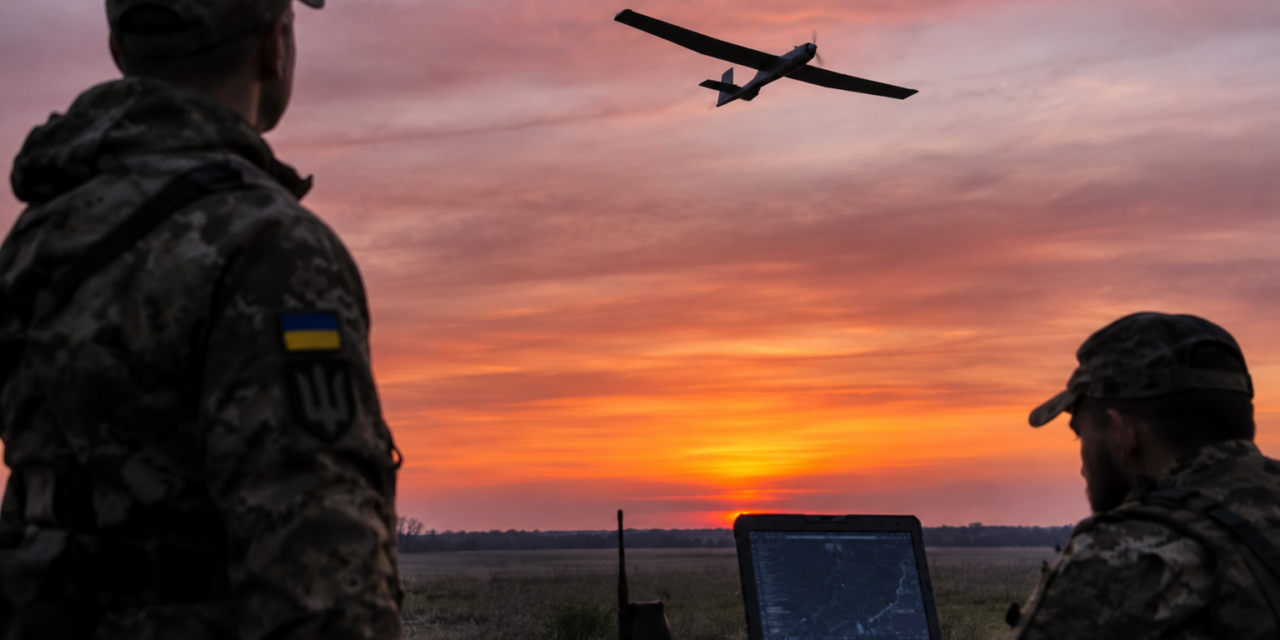
Image note: The featured image was generated by AI based on the content of this article. It is an illustration, not an actual photograph of the people, places or events described.