
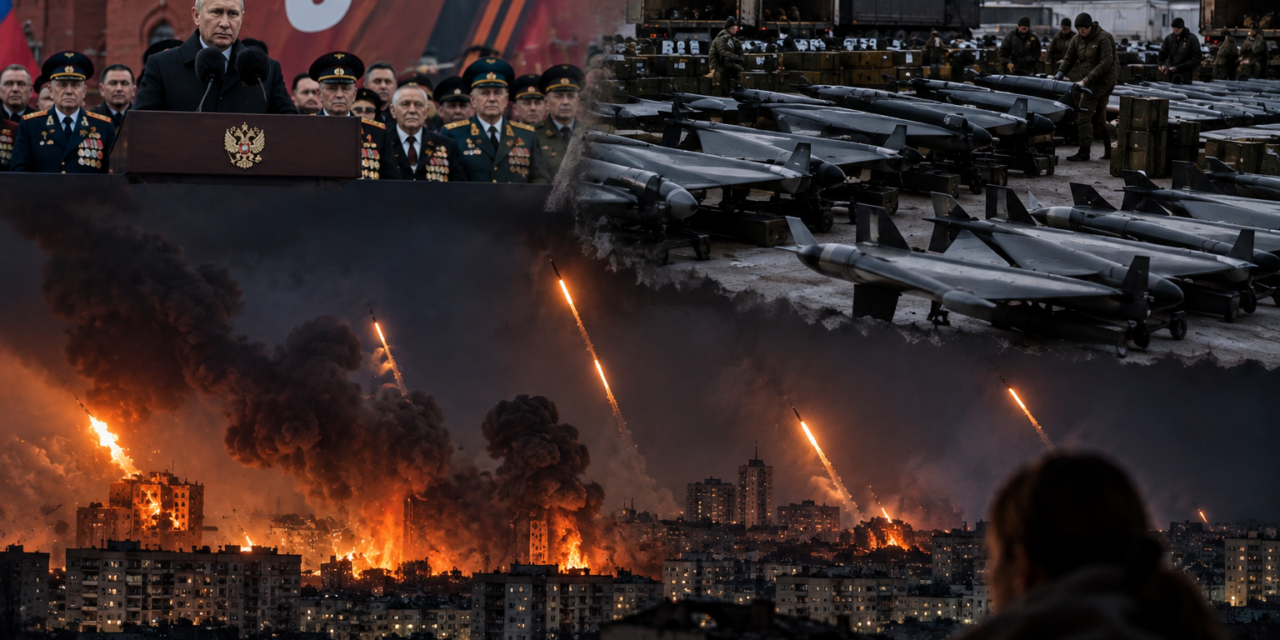
Russia’s self-declared May 9 ceasefire was not a gesture of peace but a strategic move to amass drones and missiles for a large-scale attack on Ukraine. The anticipated prisoner exchange has also been postponed, further complicating the situation.
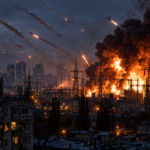
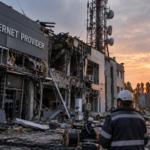
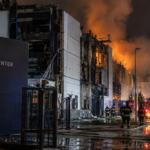
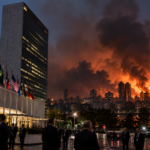
Ukraine faced the most extensive and prolonged aerial assault since the onset of the full-scale invasion. The daytime offensive on May 13 escalated into a more extensive overnight attack on May 14, targeting critical and civilian infrastructure across Ukraine. This resulted in at least 15 fatalities and over 100 injuries, including children. In Kyiv and its surrounding areas, the attacks claimed one life and injured 32 individuals.
The Ukrainian Air Force categorized the assault into three phases: from 8 a.m. to 6 p.m. on May 13, 753 drones were deployed. The subsequent night, from 6 p.m. to 8 a.m. on May 14, saw the launch of 731 drones and missiles. This 30-hour offensive marked the most intense period of the war, with over 1,600 drones and missiles launched, surpassing the previous record of approximately 1,000.
On the night of May 14, Russia executed a massive air attack on Ukraine’s critical infrastructure, deploying 731 aerial assets, including 675 Shahed-type UAVs, 3 Kh-47M2 Kinzhal air-launched ballistic missiles, 18 Iskander-M ballistic missiles, and 35 Kh-101 cruise missiles. Ukrainian forces managed to destroy or suppress at least 1,500 aerial threats, according to preliminary data.
The assault targeted almost all regions of Ukraine, including the west, north, and central areas, with significant impacts on Kharkiv and Odesa. This unprecedented accumulation of aerial attack weapons was prepared under the guise of a ceasefire.
Prior to May 9, Russia declared a three-day ceasefire, ostensibly to avoid attacks on Red Square, while simultaneously preparing for a massive assault. Despite Ukraine’s proposal to extend the ceasefire, Russia launched its attack immediately after the truce ended, causing civilian casualties and damage to residential areas.
The attack also involved Belarusian territory, implicating the Lukashenko regime. The assault lasted over 30 hours, with Kyiv’s air raid sirens blaring for nearly eight hours during the final wave.
Russia’s manipulation of the 1,000-for-1,000 prisoner exchange continues, with Moscow currently delaying the process despite Ukraine meeting its obligations, as reported by Ukrainian Ombudsman Dmytro Lubinets. This situation underscores Russia’s use of ‘peace’ as a facade for preparing attacks, highlighting the unreliability of its promises.
Stay informed by subscribing to updates and receive crucial information first. This site is protected by reCAPTCHA, and the Google Privacy Policy and Terms of Service apply. Make UNITED24 Media your preferred source on Google for exclusive reporting and military analysis from inside Ukraine.
Lesen Sie mehr unter united24media.com

 German
  English
  Ukrainian
  French
  Spanish
  Chinese