
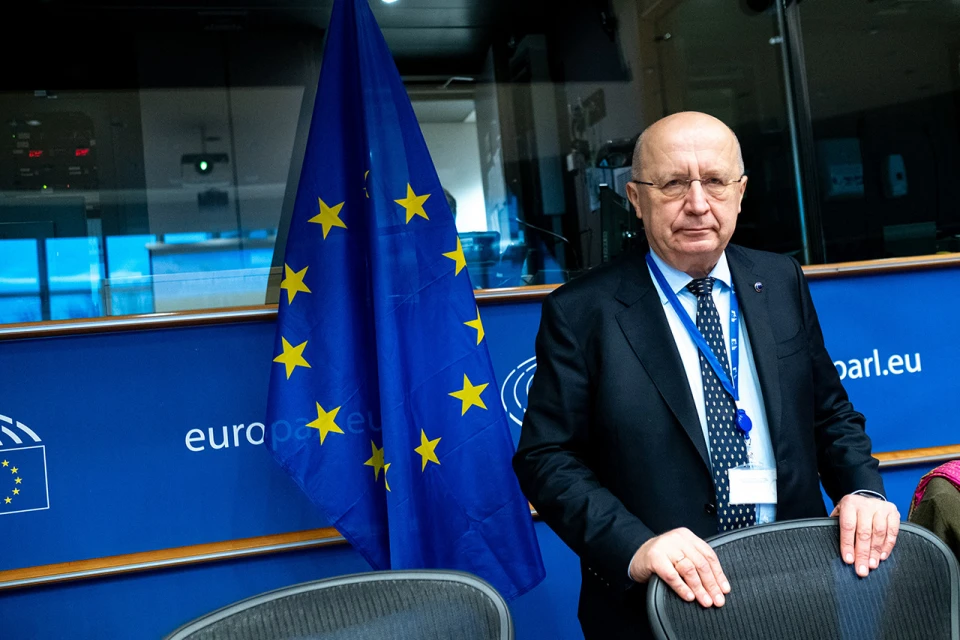
European official Andrius Kubilius argues that Europe can deter Russia and sustain Ukraine by changing how existing support is spent. Writing on X in early May 2025, he noted that the United States and the European Union together have been providing roughly €40 billion a year in military aid for Ukraine. Instead of devoting most of that money to purchases from European or American factories, he urges channeling a much larger share to Ukrainian manufacturers. His core claim is economic: comparable weapons and ammunition made in Ukraine cost about half as much as those produced in the EU or the U.S., so the same budget could buy nearly twice the volume. Viewed that way, he says, Europe could quickly present Moscow with stronger ‘arguments for peace’ if attempts by U.S. President Donald Trump to secure a settlement with Vladimir Putin fall short—by doubling the practical output of assistance without increasing top-line spending. Beyond price, Kubilius frames this as a strategic industrial policy. Procuring in Ukraine would accelerate deliveries, strengthen Kyiv’s defense sector, and deepen Western-Ukrainian integration, while signaling long-term commitment. He links the concept to available financing tools, pointing to EU “defense loans” that let member states cover arms purchases for Ukraine on favorable terms. Combined, these mechanisms could expand the flow of artillery shells, air-defense components, and other essential materiel at a pace suited to battlefield needs rather than annual budget cycles. The commissioner also references fresh funding sources that may complement this approach. According to reporting he cites, Euroclear is preparing to channel about €3 billion generated from immobilized Russian assets, illustrating how Europe can unlock resources within existing legal frameworks. Taken together, his message is that Europe does not need to wait for new appropriations to increase Ukraine’s combat power. Redirecting procurement to where unit costs are lowest and production lines are nearest to the front can immediately convert today’s euro totals into greater military effect. The proposal deliberately couples hard-nosed affordability with the political objective of ‘peace through strength’: if diplomacy does not yield a durable cease-fire, a rapid scaling of Ukrainian armament—financed with current budgets and EU loan instruments—could sharpen deterrence and improve Kyiv’s leverage at the negotiating table.
EU weighs doubling Ukraine aid if Trump fails to sway Putin






 German
  English
  Ukrainian
  French
  Spanish
  Chinese