
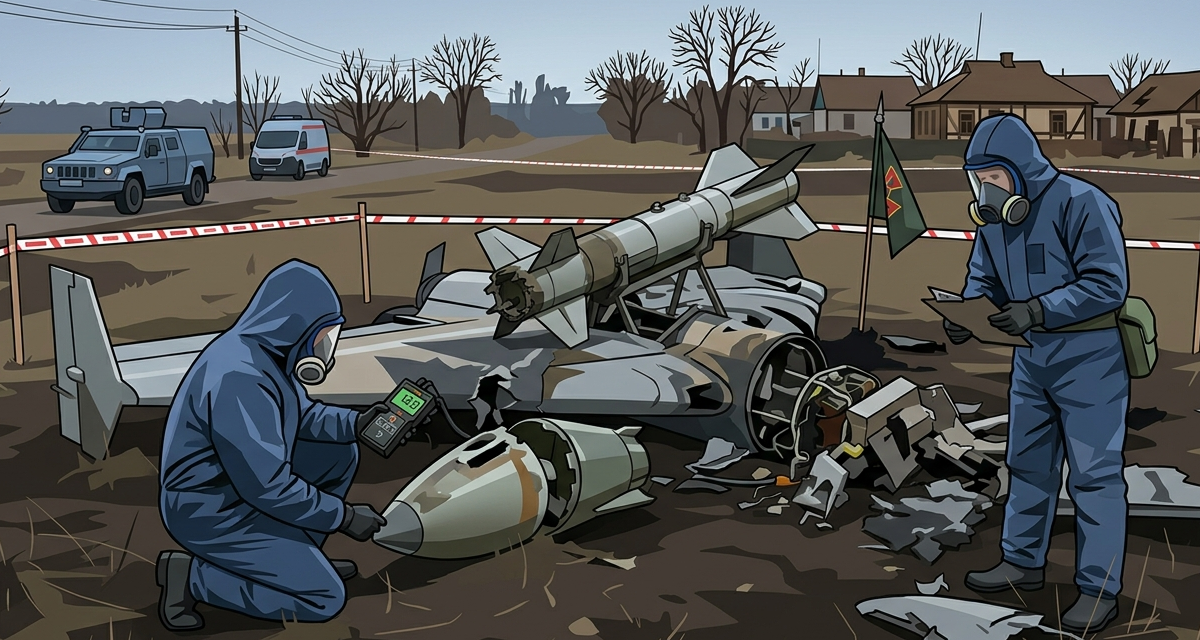
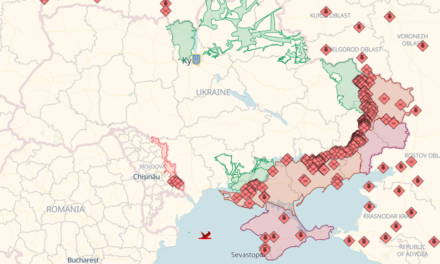
In recent developments in the arms race between Russia and Ukraine, Ukraine’s Security Service (SBU) has discovered a new use of depleted uranium in Russian weaponry. The R-60 air-to-air missile, historically known for its robustness due to depleted uranium rods, is now mounted on Geran-2/Shahed drones. These modified drones are employed by Russia to target Ukrainian aircraft and helicopters that are critical to Ukraine’s anti-drone defense. Elevated radiation levels were recorded from drone debris, indicating the presence of depleted uranium. The radiation levels at the wreck site near Kamka village were marked at 12 microsieverts per hour, enough to deem the debris hazardous to prolonged exposure. The SBU has taken protective measures, including securing the area and initiating a war-crimes investigation under Ukraine’s legal framework.
The inclusion of depleted uranium raises significant concerns about toxicity and the potential release of radioactive materials in conflict zones. The incident occurred following a drone attack in Chernihiv Oblast, and was not the first of its kind. Previous reports and supply chain disclosures have outlined similar configurations of the Geran-2 drones. In January 2026, Ukraine’s Defense Intelligence had reported a variant carrying an additional air-defense missile, marking an intensifying evolution in drone capabilities and their armament.
Serhii Beskrestnov, an adviser to Ukraine’s defense minister, highlighted that while the old Soviet missiles are equipped with uranium rods for penetration efficacy, the immediate risk is minimal if the warhead remains intact. Consequently, authorities have advised civilians to avoid any wreckage and report findings to specialists for safe handling. This adherence to safety protocols is essential to minimize environmental and public health risks, as long as the warhead maintains its integrity, preventing uranium dispersal into the environment.
Quelle: Euromaidan Press









 German
  English
  Ukrainian
  French
  Spanish
  Chinese