
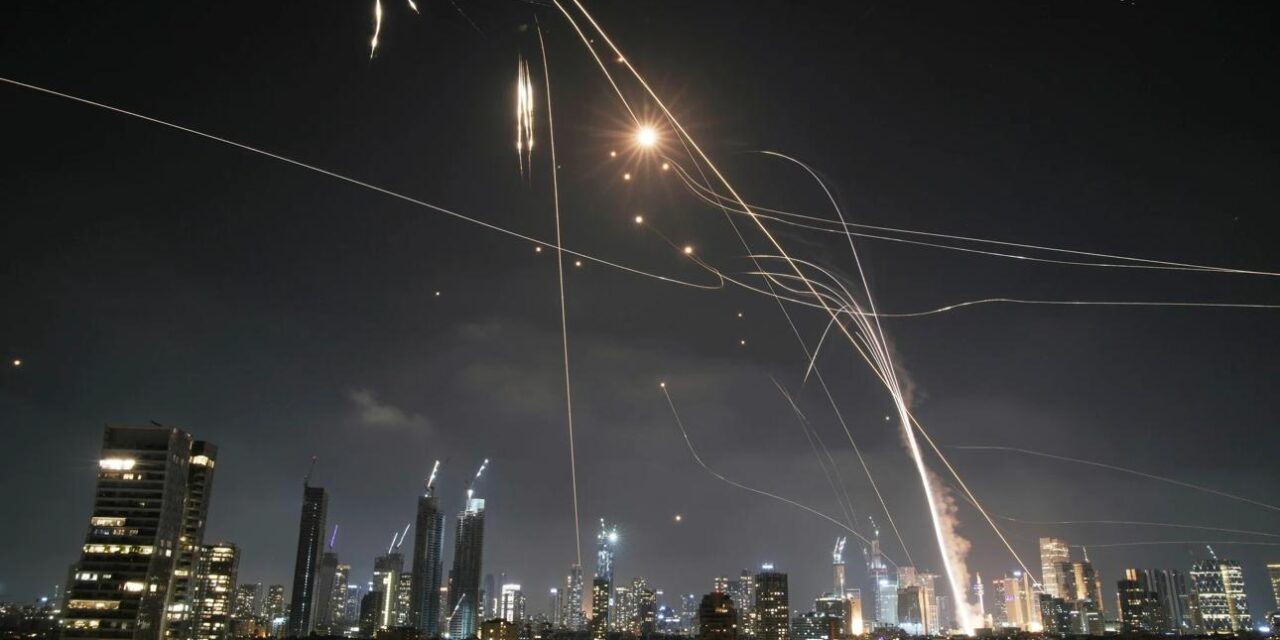
Iran’s sudden increase in missile strike effectiveness during its recent confrontation with the United States and Israel appears to stem less from technological upgrades and more from the transfer of Russian battlefield doctrine, according to analysis by the volunteer intelligence group InformNapalm. While initial assumptions pointed to improved hardware or enhanced satellite intelligence, the rapid rise in hit rates—from roughly 3% to 27% within a matter of weeks—suggests a deeper operational shift. Analysts argue that raw intelligence alone cannot explain such a dramatic improvement without an integrated system that connects reconnaissance directly to strike execution.
Since the start of Russia’s full-scale invasion of Ukraine in 2022, military cooperation between Moscow and Tehran has intensified across multiple domains. Reports indicate that Russia has shared sensitive intelligence, including the locations of U.S. and allied military assets, while also transferring advanced drone technologies such as upgraded Shahed variants. In return, Iran has supplied drone expertise that has been tested extensively in Ukraine. However, the key development lies in Russia exporting its refined approach to warfare—particularly systems that synchronize intelligence gathering, decision-making, and strike delivery in real time.
Central to this approach are two operational frameworks: the reconnaissance-strike complex and the reconnaissance-fire complex. These systems rely heavily on Russian Special Operations Forces, which serve as the critical link between data collection and weapon deployment. Their role includes verifying targets, updating coordinates, coordinating strikes, and assessing damage. Without such integration, even highly accurate intelligence remains underutilized.
The doctrine itself has been shaped through years of combat experience, first in Syria and later in Ukraine, where Russia systematically targeted infrastructure to maximize strategic disruption. Similar patterns are now observed in Iran’s targeting strategies, particularly against energy facilities and defense systems. This suggests not just data sharing, but the transfer of a comprehensive model of modern warfare.
The analysis concludes that this evolving partnership represents a broader alignment of military capabilities among authoritarian states, with implications that extend beyond regional conflicts. Ukraine’s experience in countering these tactics has simultaneously positioned it as a valuable defense partner for other nations seeking to adapt to this new form of integrated warfare.
Read more at : Euromaidanpress.com









 Spanish
  English
  Ukrainian
  French
  German
  Chinese