
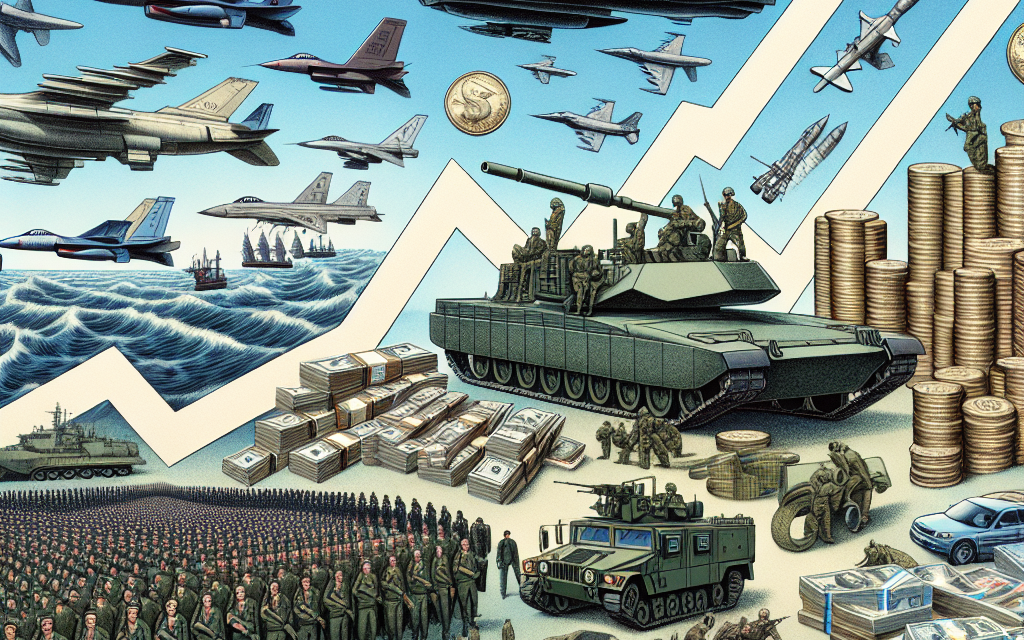
In 2025, global military spending reached unprecedented heights as countries worldwide increased their defense budgets amid ongoing conflicts and heightened geopolitical tensions. Russia and Ukraine were notably focused on boosting their military capabilities. Russia’s military expenditure rose by 5.9% to $190 billion, representing 7.5% of its GDP, which is one of the highest proportions globally. This increase was primarily fueled by revenues from oil sales that continued to support its military efforts. Simultaneously, Ukraine’s defense spending surged by 20% to $84.1 billion, making it the nation with the highest defense burden relative to its GDP, at 40%. This significant allocation underscores Ukraine’s commitment to bolstering its defense amidst its ongoing conflict.
The increased military investments were not limited to Russia and Ukraine. Europe, particularly NATO member states, saw accelerated militarization during this period. Collectively, NATO’s 29 European members spent $559 billion, with Germany taking the lead as the largest defense investor on the continent, surpassing the 2% of GDP benchmark with its $114 billion budget. Spain also ramped up its military spending, which saw a 50% increase to $40.2 billion, meeting the 2% GDP threshold for the first time since 1994.
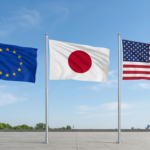
Across Asia, countries also engaged in significant rearmament efforts. Japan escalated its military expenditure by 9.7% to $62.2 billion, the highest level of spending since 1958, while Taiwan’s defense budget grew by 14% to $18.2 billion, marking its largest annual increase since the 1980s. In Ukraine, President Zelenskyy highlighted a strategic allocation of the EU’s €90 billion support, prioritizing domestic defense industry enhancements. This funding aims at strengthening weapons production and energy security, ensuring Ukraine is well-equipped in its ongoing military efforts. Overall, 2025 marked a record-breaking year for global military spending, reflecting countries’ priorities in addressing security challenges in an increasingly volatile world.
Fuente: Euromaidan Press




 Spanish
  English
  Ukrainian
  French
  German
  Chinese