
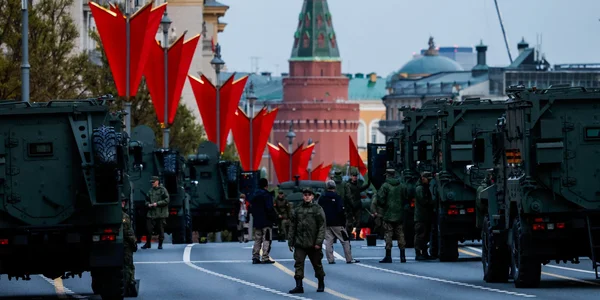
Euromaidan Press, drawing on a briefing from the volunteer intelligence network InformNapalm, reports that Russia’s Federal Security Service (FSB) has circulated internal instructions to choreograph terrorist incidents during 9 May “Victory Day” parades in several regions and then pin the blame on Ukraine. The alert is attributed to early human-intelligence sources inside Russia and describes a calculated security imbalance: while protection for the Moscow parade is reportedly maximized, regional events—explicitly including Khabarovsk and Ulan-Ude—are being left unusually vulnerable. InformNapalm interprets those gaps not as administrative lapses but as purposeful staging conditions for high-impact incidents that would yield shocking visuals, incendiary headlines, and a ready narrative that Ukraine targets civilians. The alleged aims are to stoke public anger to justify expanded mobilization, derail Western-led peace efforts, and reinforce wartime propaganda that fuses Russia’s present aggression with the mythology of its World War II victory. According to the report, planners examined a Moscow scenario but dismissed it over fears they could not contain the consequences if events spiraled. The article places the warning in a longer arc of Kremlin political theater: under Vladimir Putin, Victory Day has shifted from solemn remembrance to a ritualized display of martial power and ideological loyalty. Leveraging that spectacle—mass gatherings, parades, saturation media—would give the state an ideal platform for reflexive-control tactics, steering public interpretation toward preselected conclusions. While the scenario remains an allegation rather than a verified plot, the specificity about HUMINT sourcing and named localities underscores how information operations, manipulated security postures, and symbolic public rituals can be intertwined in Russia’s hybrid warfare playbook. A successfully staged “false flag” on 9 May could serve multiple purposes at once: delegitimizing Ukraine, re-energizing domestic support for a protracted war, and shaping international discourse at a moment of peak symbolic leverage.
False-flag risk on Victory Day: InformNapalm warns of FSB plot






 French
  English
  Ukrainian
  German
  Spanish
  Chinese