
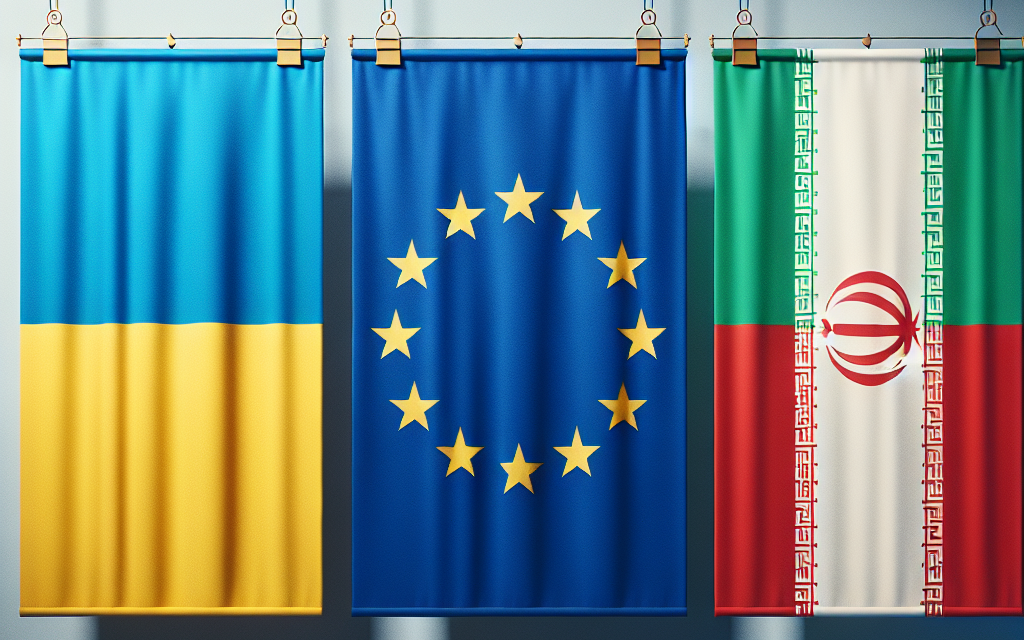
Amid escalating geopolitical tensions, Europe faces a pressing need to navigate its role in two major conflicts. The Iranian-Russian collaboration, marked by the deployment of Shahed drones, has intensified violence, with recent attacks spilling over into NATO territory. These drones serve as a stark reminder of unpunished aggression’s potential to spread, highlighting the shared challenges Europe faces from the conflict in Ukraine and Iran.
Europe, though not the progenitor of these wars, cannot remain a passive observer. Iran’s political instability compounds European concerns as the regime’s fall might worsen the situation, potentially radicalizing the country further or inciting a massive refugee crisis, thus pressuring Europe’s borders. In Ukraine, the path is clearer, demanding European support to empower Kyiv against Russian aggression, emphasizing that hesitation could embolden Moscow’s expansionist ambitions.
The call for decisive European action involves supplying military aid, including long-range missiles and transferring frozen Russian assets to Ukraine. The message is clear: Europe cannot afford to let the Kremlin’s strategies succeed through inactivity. Any failure to act decisively would lead to Russian aggression moving increasingly westward.
For Europe, the stakes go beyond short-term energy crises or diplomatic challenges. It’s about re-establishing a rules-based international order, which has been eroding since Russia’s invasion of Georgia in 2008. Europe’s focus should be on practical actions that support Ukraine’s sovereignty, preserving its future security and influence on the European continent. To truly uphold the principles of freedom and territorial integrity, Europe must shift from passivity to active engagement.
Source : Indépendant de Kiev







 French
  English
  Ukrainian
  German
  Spanish
  Chinese