
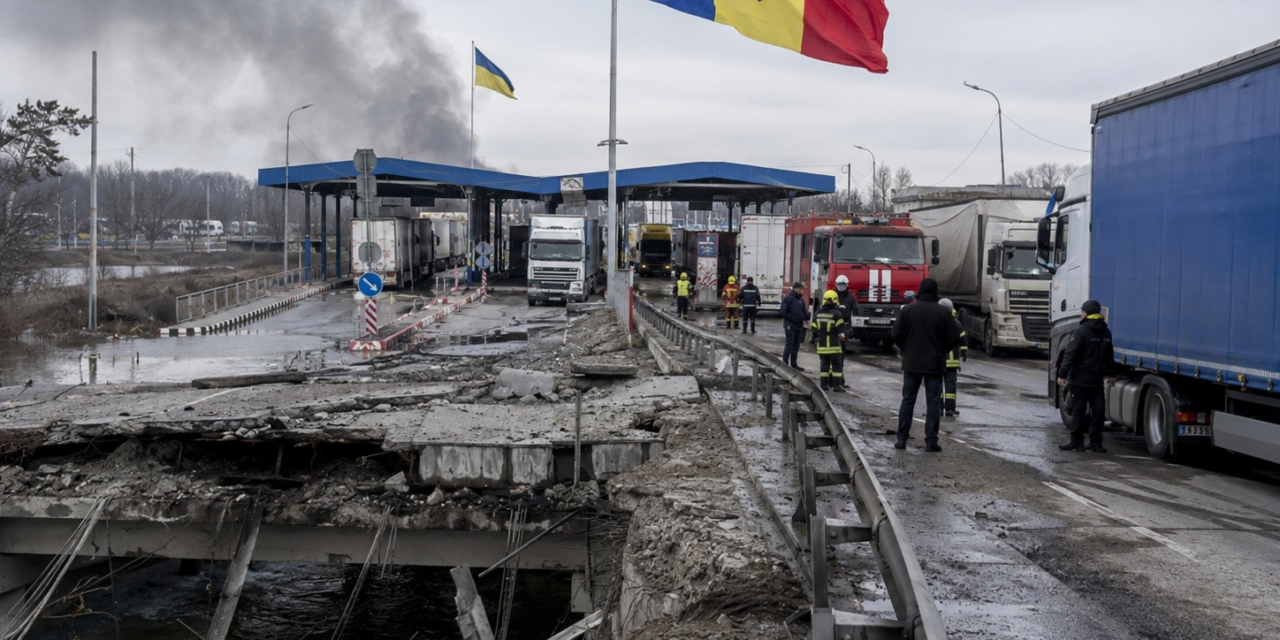
In a significant escalation of its military campaign, Russia has intensified its strikes on infrastructure along the Ukrainian-Moldovan border. This move is part of a broader strategy targeting Ukraine’s port and maritime facilities. Throughout August 2026, Russian forces have increasingly focused on key routes used by Ukraine for trade with Europe, striking critical infrastructure such as the Zatoka and Mayakyi bridges near Odesa, and several border crossings northwest of Izmail.
According to a spokesperson from the Ukrainian State Border Guards Service, Russian forces have targeted these border crossings multiple times since August 20. The strikes aim to disrupt Ukraine’s ground lines of communication (GLOCs) with Moldova, further complicating Ukraine’s export routes amid ongoing assaults on its port infrastructure. This dual strategy seeks to isolate Ukraine from European markets and hamper its grain exports, thereby weakening its economy.
Beyond the immediate military objectives, these strikes serve a broader political purpose. By targeting border areas, Russia aims to create a perception of risk for Moldova’s potential integration into Western alliances, thereby deterring support from neighboring countries like Romania. The Kremlin appears willing to accept the risks associated with these border strikes, using them to test the responses of Moldova and NATO, while normalizing violations of airspace.
Simultaneously, the Kremlin is addressing internal concerns over President Vladimir Putin’s decree on the nationalization of critical infrastructure. Russian officials, including First Deputy Prime Minister Denis Manturov, have clarified that the decree allows for temporary management of facilities failing to protect against security threats, rather than outright nationalization. However, the lack of clear guidelines has led to uncertainty among businesses and experts.
In a related development, Russia launched a military satellite on August 24, potentially as part of its Rassvet satellite constellation. This launch underscores Russia’s ongoing efforts to bolster its military capabilities. Meanwhile, Ukrainian forces have continued their long-range strikes on Russian oil and energy infrastructure, targeting facilities in Krasnodar Krai and Astrakhan Oblast, among others.
Amid these developments, CIA Director John Ratcliffe reportedly made an unscheduled visit to Moscow for undisclosed meetings, highlighting the ongoing geopolitical tensions. The situation remains fluid, with both Ukrainian and Russian forces engaged in various offensive and defensive operations across multiple regions.
Pour en savoir plus understandingwar.org







 French
  English
  Ukrainian
  German
  Spanish
  Chinese