

Moscow has heightened its threats against Ukraine, cautioning of “consistent, systematic strikes on Kyiv targeting its military industrial complex.” Additionally, it has urged foreign citizens and diplomatic staff to vacate the city “as soon as possible.” While this sounds alarming, it raises questions about whether it signifies a new phase in the ongoing conflict.
Historically, such threats are not unprecedented. Ukraine’s foreign ministry highlights that Russia has been targeting towns and cities weekly for over four years. It assesses that “the overall level of security threats posed by Russia to Kyiv and other cities remains the same as previous months and years.” However, the language used by the Kremlin to justify these attacks is novel and linked to a specific incident.
Moscow has accused Ukraine of intentionally killing 21 students in a strike last week on Starobilsk in Luhansk province. Ukraine maintains it targeted a military facility in Russian-occupied territory. Moscow is framing the incident, and what it claims to be a deliberate attack on civilians, as a legitimate reason for retaliation. In the past, such attacks seldom required justification, nor has Russia shown significant remorse for civilian casualties in Ukraine.
Ivan Stupak, a military analyst and former Ukrainian intelligence officer, suggests that Moscow’s rhetoric indicates a struggle to control the war narrative. He notes, “When you have problems with the economy and Russian society, then there’s pressure for revenge.” While the rhetoric may reflect growing frustration in the Kremlin, Andrii Kovalenko of Ukraine’s National Security and Defence Council believes other factors are at play, unrelated to the Luhansk attack.
Kovalenko cites Russia’s lack of battlefield success as a reason for the threats, stating, “In the absence of strategic results on the front, the Kremlin is trying to exert psychological pressure on Ukraine.” This pressure extends to Ukraine’s allies, with Moscow warning diplomatic staff to leave Kyiv. Strong European support for Ukraine is seen by the Kremlin as a significant obstacle to its war aims.
Furthermore, Kovalenko argues there is an attempt to divert attention from Ukraine’s long-range strikes on Russian territory and its defensive capabilities, including Moscow. The war, now in its fifth year, is not progressing favorably for Moscow. The Washington-based Institute for the Study of War has assessed that “the character of the war is shifting in favor of Ukrainian forces – at least for now.” It reports that Russian casualties are outpacing recruitment figures for five months.
Nigel Gould-Davies of the International Institute of Strategic Studies notes that with Russia “facing growing industrial and manpower constraints, it must soon decide whether to forcibly mobilize its economy and society.” Such mobilization could be highly disruptive and unpopular, posing significant risks to Russia’s stability.
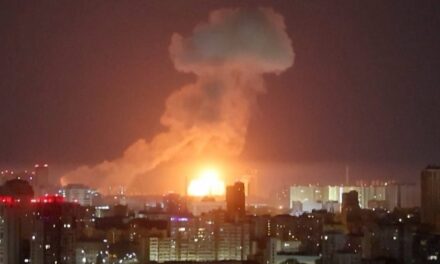
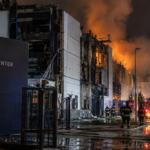
Despite these challenges, the threat to Ukraine remains. Kyiv is still recovering from Russia’s recent “revenge attack” over the weekend, involving nearly 600 drones and 90 missiles, primarily targeting the capital. Ukraine’s air defenses intercepted most drones, but 35 missiles hit targets. The bombardment included the rare use of a Russian hypersonic Oreshnik missile, difficult to intercept with conventional air defense systems.
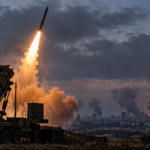
Stupak suggests the missile’s primary use is “propaganda purposes,” noting that Russian Oreshniks have so far carried inert warheads, causing limited damage. Kyiv may struggle to handle similar large-scale, repeated attacks. Ukrainian President Volodymyr Zelensky has renewed appeals to allies for more air defense systems. Yurii Inhat, a spokesman for Ukraine’s Air Force, emphasizes the “limited number of interceptor missiles available for Ukraine’s air defenses.” US-made Patriots remain the only effective weapon against Russia’s ballistic missiles.
There are signs that Russia is becoming more desperate, but for Ukraine and its allies, this may also be a cause for concern.
Читайте більше за посиланням bbc.com



 Ukrainian
  English
  French
  German
  Spanish
  Chinese