
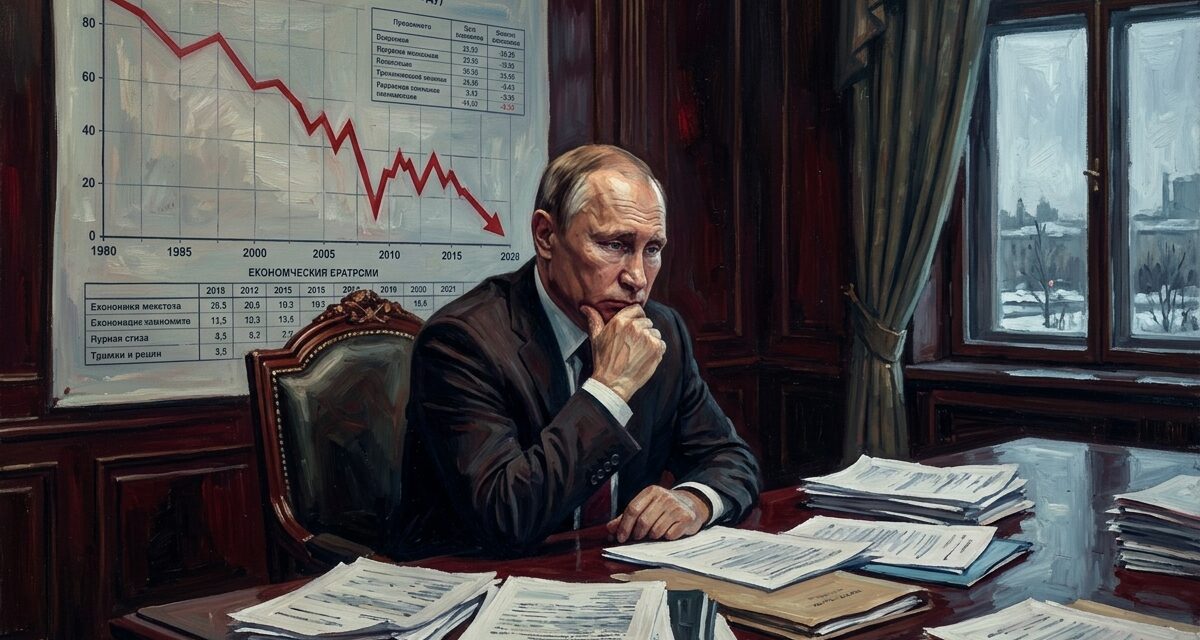
Russian President Vladimir Putin is endeavoring to project an image of economic resilience capable of sustaining a prolonged conflict in Ukraine. This narrative is likely part of a broader psychological strategy to assert that a Russian victory is inevitable. On December 8, during the Council for Strategic Development and National Projects, Putin emphasized efforts to address demographic challenges and boost birth rates, highlighting various support measures for families with children.
Putin acknowledged a declining birth rate, attributing it partly to unspecified ‘external challenges,’ likely referencing the war’s demographic impacts. He announced that birth rate metrics would be included in regional governors’ performance evaluations. Notably, he claimed significant improvements in sociological indicators regarding family planning in occupied Kherson and Zaporizhia oblasts, areas where Russian authorities have been promoting pro-natalist policies to exploit Ukraine as a demographic and economic resource.
Putin predicted a GDP growth of about one percent by 2025’s end, with inflation rates near or below six percent, and the Central Bank forecasting four to five percent inflation in 2026. He asserted that Russia could gradually enhance its ‘economic momentum’ while maintaining low unemployment and moderate inflation. However, Russian Prime Minister Mikhail Mishustin’s claims of a 10 percent GDP growth over three years, despite sanctions, contrast with the Kremlin’s economic policies, which suggest a less robust economic reality.
The Kremlin’s economic rhetoric appears aimed at convincing the United States that increased sanctions will not compel Russia to compromise in its war against Ukraine. Putin’s speeches notably omit direct references to the ongoing conflict, likely to obscure the link between battlefield setbacks and economic difficulties. This narrative aligns with the false assertion of an inevitable Russian victory, intended to pressure the West and Ukraine into capitulating to Russian demands.
Russian officials continue to demonstrate an unwillingness to compromise. On December 8, Russian State Duma Defense Committee Deputy Chairperson Alexei Zhuravlev stated that Russia is indifferent to who signs a capitulation agreement, as long as it satisfies Russian terms. He suggested that the root causes of the invasion stem from deteriorating US-Russia relations, advocating for a peace agreement exclusively with the United States, not Ukraine.
Meanwhile, Russia reportedly plans to incite protests in Ukraine to support its narrative of an illegitimate Ukrainian government. Ukrainian Ombudsman Dmytro Lubinets reported on December 8 that Russian special services aim to destabilize Ukraine by organizing ‘peaceful protests’ in major cities, recruiting women, particularly mothers of Ukrainian military personnel, for these demonstrations. This tactic seeks to pressure Ukraine’s leadership amid peace negotiations.
Ukraine’s long-range strike campaign continues to degrade Russian logistical capabilities. On December 8, the Ukrainian General Staff reported that a recent drone strike significantly damaged the Temyruk Sea Port, a critical logistics hub for Russian forces. Russian forces persist in offensive operations in various regions, including Sumy and Kharkiv Oblasts, but face challenges such as poor weather, manpower shortages, and continued Ukrainian drone strikes.
Despite ongoing Russian offensives, Ukrainian forces have counterattacked in several areas, maintaining control over strategic locations and disrupting Russian supply lines. The Kremlin’s narrative of inevitable victory is undermined by these battlefield realities and economic vulnerabilities, which the West and Ukraine can leverage to negotiate meaningful concessions from Russia.
Read more at understandingwar.org





 Chinese
  English
  Ukrainian
  French
  German
  Spanish