
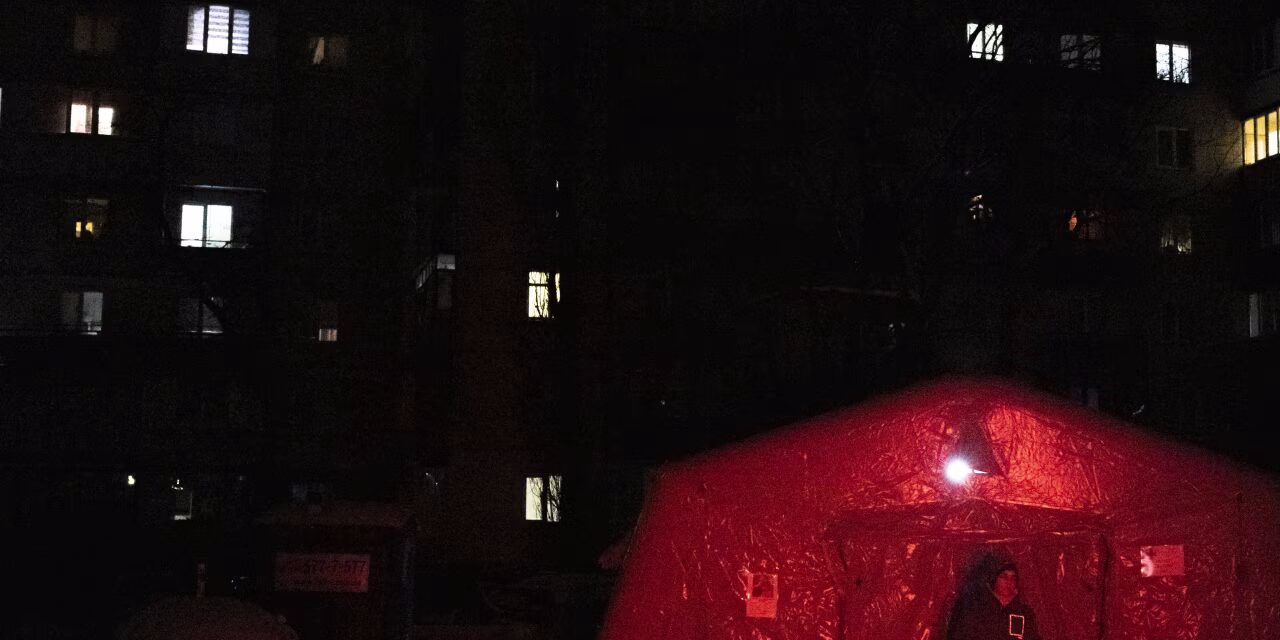
In a cold, dim apartment on Kyiv’s left bank, a young mother named Daria struggles to maintain a livable environment after sustained attacks on Ukraine’s energy infrastructure left her building without heating or consistent electricity. Like many residents in the Rusanivka district, she has resorted to using her gas stove to slightly raise indoor temperatures, though the warmth is minimal and comes with serious side effects. Persistent condensation caused by constant gas use has turned her apartment damp, with water dripping down walls and ceilings, creating ideal conditions for mold. The living space, shared with her toddler, has become increasingly unhealthy and uncomfortable.
Daria’s situation reflects a broader crisis affecting hundreds of residential buildings and more than a million people across Kyiv’s left bank. Weeks without central heating and limited access to electricity have forced residents to improvise solutions to survive harsh winter conditions, with temperatures regularly dropping far below freezing. In many buildings, generators provide only a few hours of power each day, leaving basic household tasks such as cooking, storing food, and doing laundry extremely difficult. Refrigerators sit unused, balconies double as makeshift freezers, and clothes take days to dry in the cold air.
he damage extends beyond discomfort. Severe cold has caused radiators to burst, leading some residents to remove them entirely. Elevators remain nonfunctional, forcing families to climb multiple flights of stairs daily. Schools and kindergartens also struggle, with indoor temperatures too low for children to attend safely.
Despite these hardships, residents continue to adapt, even as ongoing missile and drone attacks add a constant layer of danger. Daria, like many others, remains committed to staying in Kyiv, finding strength in resilience while quietly questioning how such extreme conditions have become a normalized part of daily life.
Read more at kyivindependent.com







 Chinese
  English
  Ukrainian
  French
  German
  Spanish