

Ukraine’s long-range drone campaign has reached a significant milestone by targeting one of Russia’s most politically symbolic cities, St. Petersburg. The attack struck the Petersburg Oil Terminal, a critical facility in Russia’s Baltic oil operations, as Moscow prepared to host its flagship international economic forum. This event, attended by foreign business guests, was overshadowed by the strikes.
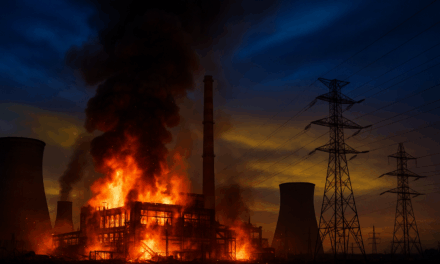
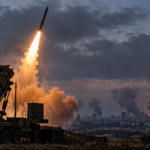
Footage shared by the OSINT community Exilenova+ and confirmed by Ukrainian President Volodymyr Zelenskyy showed fires raging across the oil terminal following the drone attack. Local residents captured videos of multiple explosions and Russian air defense systems attempting to intercept the drones. The target, JSC Petersburg Oil Terminal, is one of Russia’s largest facilities for handling oil products in the Baltic region.
Alexander Drozdenko, governor of the Leningrad region, claimed that Russian air defenses had allegedly shot down 50 drones over the area. However, he did not comment on the fire that ensued in St. Petersburg. The terminal, covering 37 hectares with 21 storage tanks, has an annual throughput capacity of 12.5 million tons and is strategically important for Russia’s security.
The attack coincided with the opening of the St. Petersburg International Economic Forum, scheduled from June 3 to June 6, raising concerns about its impact on the event. Russian media reported delays and cancellations of flights at Pulkovo Airport in St. Petersburg following the attack. Zelenskyy confirmed that Ukrainian strikes had hit the terminal and other targets on Russian soil, emphasizing the strategic importance of these operations.
He highlighted that the terminal is part of Russia’s oil industry, which supports the war effort. Additionally, a strike targeted an enterprise in Russia’s Tambov region involved in weapons production. Zelenskyy praised the precision of Ukrainian forces, stating that their long-range sanctions plan is being executed effectively to bring peace closer.
Reports indicate that Ukrainian drone attacks on Russian energy infrastructure reached a record high in May, prompting Moscow to ban jet fuel exports. This development threatens to further impact Russia’s energy processing capabilities, which are already at a 16-year low.
Read more at united24media.com





 Chinese
  English
  Ukrainian
  French
  German
  Spanish