
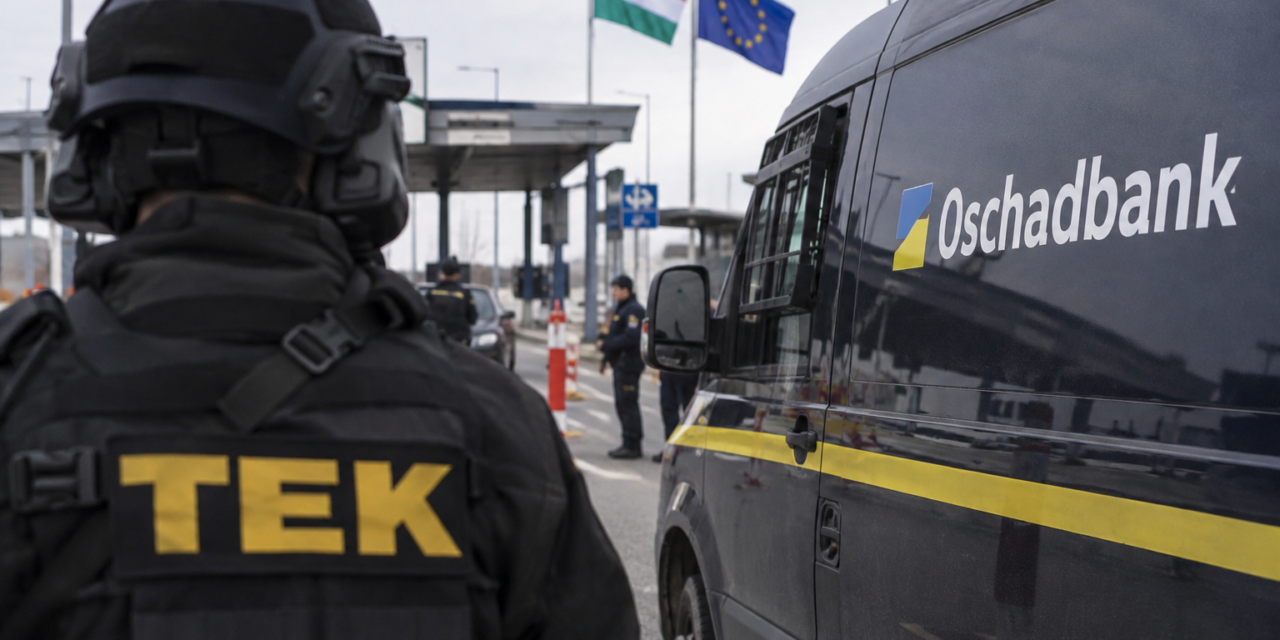
Ukraine’s state-owned Oschadbank has launched an international legal fight to recover about $82 million in cash and gold seized by Hungarian authorities, in a dispute that has sharply worsened relations between Kyiv and Budapest. The bank set out its plans on March 8, 2026, three days after Hungarian forces stopped its cash convoy.
A convoy stopped by counter-terrorism forces
On March 5, Hungary’s Counter-Terrorism Centre (TEK), working with the National Tax and Customs Administration (NAV), intercepted two Oschadbank armored cash-in-transit vehicles traveling from Vienna to Kyiv. The vehicles carried $40 million, €35 million and 9 kilograms of banking gold, money that Oschadbank says belonged to Ukrainian citizens and businesses and was meant to replenish cash circulation at home.
Seven Ukrainian crew members were held for more than 24 hours, according to Oschadbank without access to lawyers or consular support. Ukraine’s ambassador and the crew’s lawyer were both turned away. The seven were released and expelled on the evening of March 6, but the vehicles, cash and gold remain in Hungarian custody.
Money laundering claim vs. “state terrorism”
NAV said it was pursuing criminal proceedings on suspicion of money laundering and noted that the detainees included a former Ukrainian intelligence general. Kyiv rejected the claim. Foreign Minister Andrii Sybiha accused Hungary of “taking hostages and stealing money,” called it “state terrorism and racketeering,” and urged the EU to respond. Ukraine advised its citizens not to travel to Hungary.
Oschadbank said the transport was routine, that Ukrainian banks move cash by road roughly every week during the war, and that it operated under a valid agreement with Raiffeisen Bank Austria with full customs documentation. The bank said it is “absolutely certain” it acted lawfully.
Two-track legal response
Oschadbank will challenge the measures taken against its employees and take formal legal steps to recover the two vehicles, the cash and the gold. It has also commissioned an independent audit by a leading international firm and submitted documentation to the National Bank of Ukraine.
Part of a wider dispute
The seizure came amid a bitter row over the Druzhba oil pipeline. Hungary and Slovakia accuse Ukraine of delaying the restart of Russian oil flows after a Russian drone strike damaged the pipeline in January, which Kyiv denies. Prime Minister Viktor Orbán, facing a tough election on April 12 against opposition leader Péter Magyar, has vowed to use all available means until the oil flows resume, and Hungary has blocked tens of billions of euros in EU aid for Ukraine. Hungarian fact-checkers also found that fake AI-generated images of the detention spread online, largely amplified by bot accounts.
Sources
Image note: The featured image was generated by AI based on the content of this article. It is an illustration, not an actual photograph of the people, places or events described.