

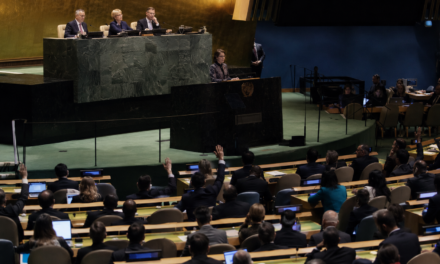
HR/VP Kaja Kallas, in her keynote speech at the 2026 EU Ambassadors Conference, emphasized the unpredictable yet increasingly consistent global landscape faced by the European Union. She underscored the pressing crises in the Middle East and Russia’s ongoing war against Ukraine, highlighting a shared foundation of eroded international law. Russia’s invasion of Ukraine, marked by impunity, has signaled a lack of global accountability, resulting in widespread chaos.
Kallas asserted the importance of restoring international law and accountability to prevent repeated disruptions. She praised the EU’s substantial support for Ukraine, amounting to 195 billion euros since 2022, indicating Europe’s commitment to its defense and sovereignty. Kallas recognized the necessity of a robust European defense in coordination with NATO, viewing it as a deterrent against further aggression.
The speech also addressed the expansion and stability of the EU neighborhood, asserting enlargement as a critical geopolitical strategy. Kallas pointed out the public’s growing support for enlargement, linking it to countering Russian imperialism. Additionally, she discussed the EU’s proactive role in maintaining stability in the Middle East and North Africa, emphasizing solidarity in action through evacuation efforts and military collaborations.
For economic growth, Kallas highlighted partnerships and extensive trade agreements as crucial for strengthening Europe’s global standing. She indicated a strategic shift towards a more agile, responsive EU delegation network while urging ambassadors to focus on key priorities. Kallas stressed the principles of action, global thinking, diplomatic presence, inter-agency collaboration, and effective communication as essential for EU representatives to navigate complex international landscapes effectively.
In closing, Kallas recognized the significant challenges ahead but expressed confidence in the EU’s ability to adapt and maintain its influence globally through strategic diplomatic efforts and adherence to core European principles.
Read more at EEAS





 English
  Ukrainian
  French
  German
  Spanish
  Chinese