
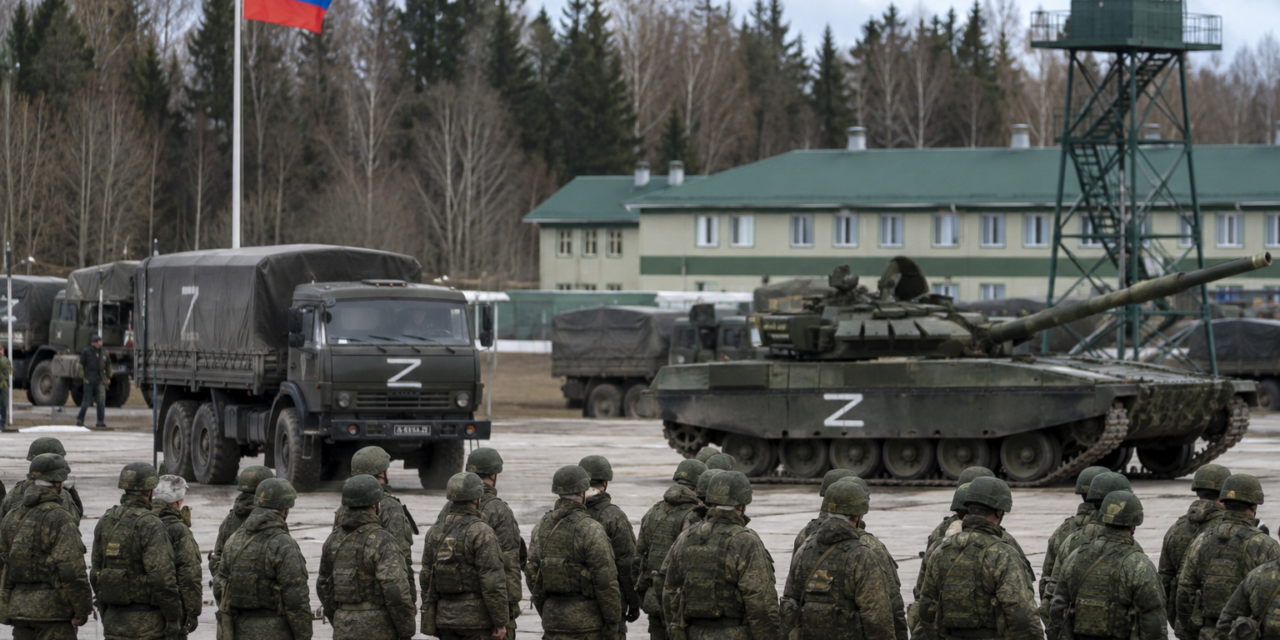
Russia is building new military infrastructure along its borders with Norway, Finland, the Baltic states and in its Kaliningrad exclave, with potential capacity for up to 115,000 personnel, according to a joint investigation published on June 10, 2026. Nordic and Baltic intelligence officials warn the buildup could be preparation for a future confrontation with NATO once the war in Ukraine winds down.
The investigation, carried out by Swedish broadcaster SVT, Norway’s NRK, Denmark’s DR and Estonia’s Delfi, is based on commercial satellite images showing new barracks, ammunition depots, concentrations of equipment and expanded base perimeters.
Where Russia is building
- Petsamo: about 10 kilometers from the Norwegian border, where capacity is being expanded from 7,000 to 17,000 personnel.
- Petrozavodsk and Sapyorny: near the Finnish border.
- Luga: near Pskov and close to the Estonian border.
- Baltiysk: in the Kaliningrad region.
Finnish Army Commander Gen. Pasi Välimäki said the Russian force near Finland’s borders could grow from about 20,000 to 80,000 troops. Russia is also reportedly replacing some brigades of about 4,000 soldiers with divisions of around 10,000, capable of sustaining larger operations.
“Not just for demonstration”
“We don’t think all of this is just for demonstration,” said Thomas Nilsson, head of Swedish military intelligence, adding that the aim appears to be preparing for a major conflict with NATO at a later stage. Norwegian Army Commander Eirik Kristoffersen warned that if Russia reaches the planned force levels, “the military threat to Norway will grow.”
Danish Major General Brian Nissen, who would lead a NATO force of up to 150,000 troops defending the Baltic states and Poland, said the immediate threat is low while Russia is tied down in Ukraine, but warned that could change quickly if fighting there pauses. He said a future war would be fought “on land, in the air, at sea, in space and in cyberspace.” A former Finnish military intelligence officer, Marko Eklund, said Moscow could move combat-experienced units to the border region within weeks.
Capacity, not confirmed troops
The 115,000 figure refers to potential capacity rather than troops actually deployed, and officials said there is no sign Moscow has decided to attack a NATO country. Still, planners increasingly see the Baltic Sea region as the most likely flashpoint, and Nordic officials say the next one to three years will be critical as Europe races to rebuild stockpiles and expand its defense industry.
Sources
Image note: The featured image was generated by AI based on the content of this article. It is an illustration, not an actual photograph of the people, places or events described.