
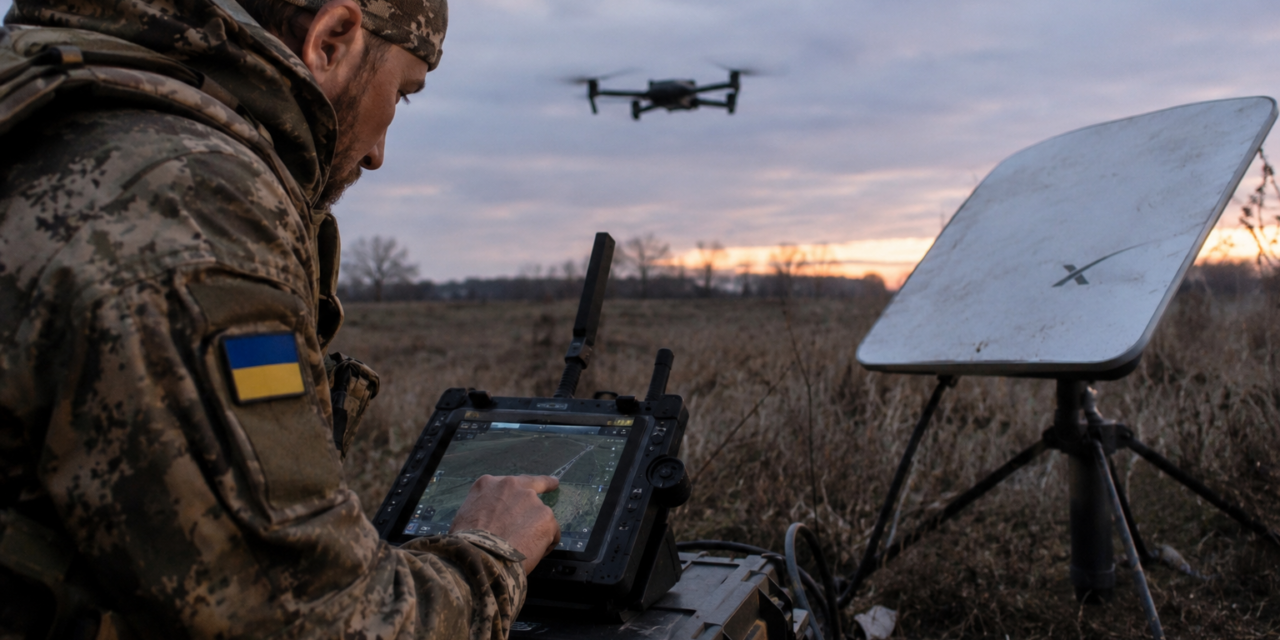
Ukraine’s Operation Vivaldi, a counteroffensive that retook ground in the Lyman direction of Donetsk Oblast, relied heavily on drones and satellite communications, but a new speed cap on Ukraine’s Starshield access now threatens the kind of operations that made it possible.
277 square kilometres
Ukrainian forces have recaptured 277 square kilometres in Donbas and freed 16 settlements over the past year, with about 250 Russian soldiers surrendering and officials citing some 8,000 Russian casualties. The operation used high-tech drones and satellite links.
Russia’s northern pincer defeated
The Institute for the Study of War said Vivaldi “fundamentally disrupted the Russian campaign for Donetsk Oblast” by defeating Russia’s northern pincer against the Fortress Belt of Sloviansk and Kramatorsk. Brigadier General Andrii Biletskyi said Ukrainian forces now hold a shorter line along the Zherebets River, which Russia must cross again before renewing offensives toward Lyman, and that Russia’s 144th Motorized Rifle Division had “effectively ceased to exist as an organized military force.”
The 160 km/h problem
Since October 14, Ukraine has faced an in-motion speed limit of about 160 km/h on Starshield terminals, according to adviser Serhiy Beskrestnov. ISW said Ukrainian Unmanned Systems Forces data suggests the cap has significantly degraded strikes on Russian logistics and disrupted links to interceptor drones.
Risk of reversal
Russia has shifted to costlier frontal assaults east of Sloviansk and Kramatorsk. Ukrainian officials warn that without reliable satellite links for fast-moving drones, the advantage won in Vivaldi could erode.
Sources
Image note: The featured image was generated by AI based on the content of this article. It is an illustration, not an actual photograph of the people, places or events described.