
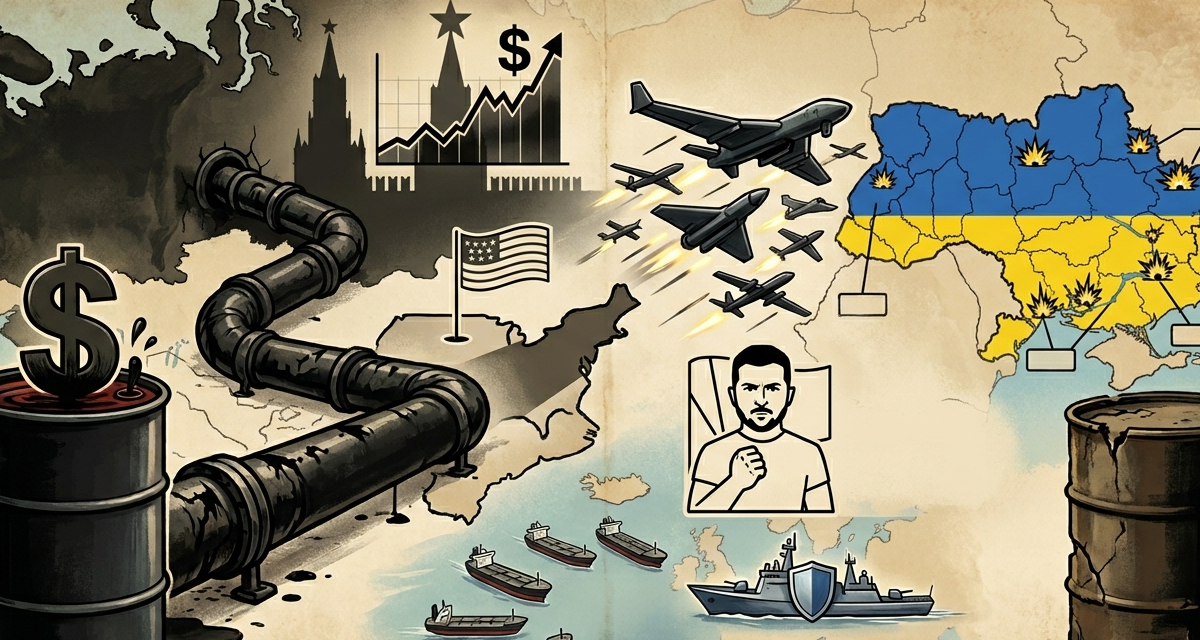
Russia has intensified its military attacks on Ukraine, deploying over 1,500 drones and more than 1,200 bombs. Concurrently, sanctioned-relief measures, imposed during the Iran war, have enabled Russia to sell more oil and consequently fund its military operations in Ukraine. Ukrainian President Volodymyr Zelenskyy attributes this escalation to increased oil revenues, driven by relaxed sanctions and appeals for a blockade of shadow fleet tankers in European waters.
The easing of oil sanctions, initially aimed at stabilizing global energy markets amid rising oil prices, has inadvertently augmented Russia’s economic strength. During the US-Israeli confrontation with Iran, oil prices surged above $119 a barrel, prompting the Trump administration to temporarily relieve sanctions on Russian crude to circumvent an energy crisis. This maneuver unexpectedly provided the Kremlin with a financial uplift, allowing it to maintain and even escalate military aggression against Ukraine.
Zelenskyy has implicated the 30-day waiver granted by the United States as a significant factor in Russia’s renewed financial vigor. This waiver coincided with Western sanctions that had previously suppressed Russia’s oil earnings. By selling oil at par with global benchmarks, Russia’s revenues surged to levels that helped sustain its military activities. The availability of funds for weapons purchases was reflected in the significant escalation of military attacks on Ukraine.
President Zelenskyy is urging Western nations to tackle the operational freedom of Russia’s shadow oil fleet. He advocates for actionable steps against these tankers, emphasizing that they should be intercepted and blocked in European waters. Zelenskyy sees these tankers as part of Russia’s war resource chain, and stopping them is crucial to weakening its war efforts. The situation exemplifies the complex interplay between geopolitical energy decisions and on-ground military conflicts, necessitating strategic interventions to curb unintended consequences of policy decisions.
Quelle: Euromaidan Press




 German
  English
  Ukrainian
  French
  Spanish
  Chinese