
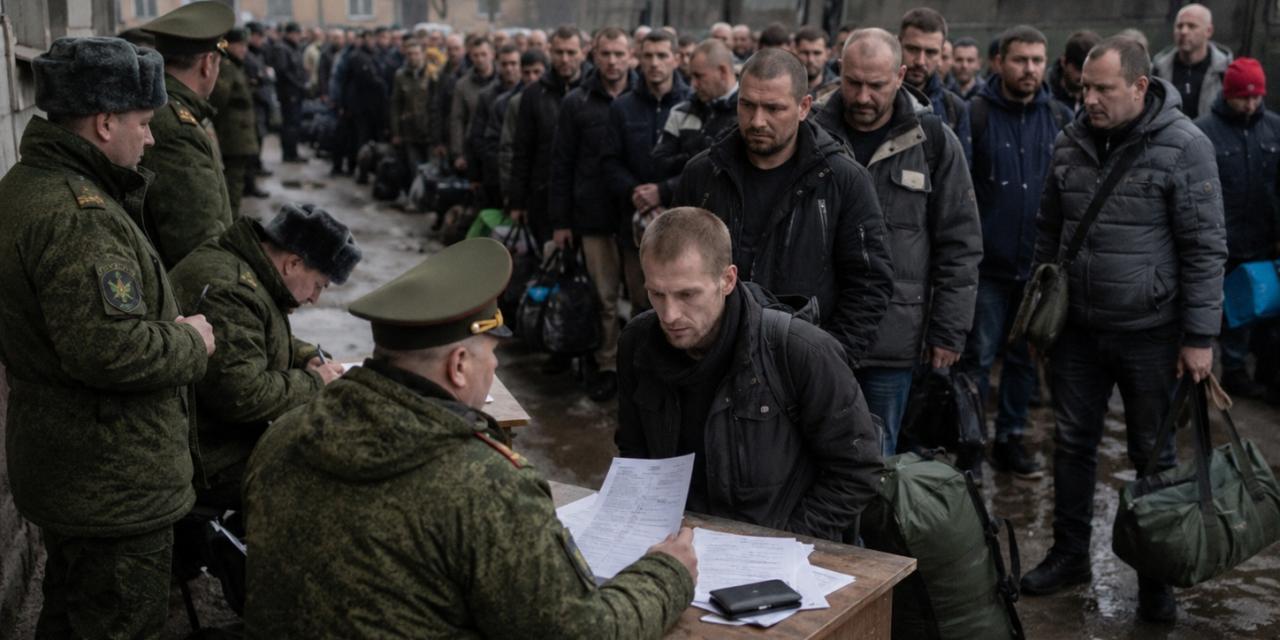
Ukrainian intelligence has identified signs that Russia is gearing up for a new wave of mobilization following the State Duma elections on September 21, 2026. This move is anticipated to occur in early October and could involve the enlistment of 300,000 to 500,000 new recruits.
This decision reflects the failure of Russia’s current recruitment system. The contract-based model, which has supported the Kremlin for the past two years, is now insufficient to compensate for battlefield losses. Internal Russian documents, as cited by President Volodymyr Zelenskyy and Ukraine’s Defense Intelligence (HUR), confirm these mobilization preparations.
Ukraine’s Center for Countering Disinformation estimates that up to 500,000 individuals could be mobilized. Some recruits might be deployed to the eastern front within two weeks to address immediate manpower shortages, while others could undergo a month of training, possibly indicating plans for a new operational direction.
Preparatory measures are already evident. There has been a notable rise in job postings related to military registration and enlistment administration in Russia, suggesting an expected influx of conscripts. The first wave of mobilization in 2022 led to widespread public backlash, with about one million people, mostly educated professionals, leaving the country.
In response, the Kremlin shifted to a contract soldier model, offering financial incentives to attract recruits. However, this approach began to falter in 2025, with a significant decline in new contracts. By 2026, the number of recruits receiving signing bonuses had dropped, and recruitment targets were not met.
Russia’s military suffered approximately 196,700 personnel losses in the first half of 2026, nearly matching the number of new recruits. This situation marks a turning point, as Russia’s force in Ukraine has stopped growing for the first time since the full-scale invasion began.
The stalled offensive in Ukraine has resulted in high casualties and minimal territorial gains. Putin believes that mobilizing additional troops could reinvigorate the military campaign, despite the domestic political risks. The process is expected to start in early October, after the State Duma elections.
Despite expanding the Russian Armed Forces on paper, the declining contract recruitment and increasing authorized force levels suggest mobilization is the only viable option. However, the war’s technological advancements mean sheer manpower may not determine the outcome. Larger formations could lead to higher Russian casualties due to the battlefield’s saturation with drones.
Ukraine’s logistical strategies have effectively disrupted Russian troop movements, and the Kremlin faces challenges in training and equipping new soldiers. The federal budget deficit and declining public support further complicate Russia’s war efforts.
For Ukraine, a new Russian mobilization highlights the need for enhanced military preparedness, including increased weapon supplies and international support. The ongoing conflict underscores the critical role of Ukraine’s allies in sustaining its defense capabilities.
Lesen Sie mehr unter united24media.com



 German
  English
  Ukrainian
  French
  Spanish
  Chinese