

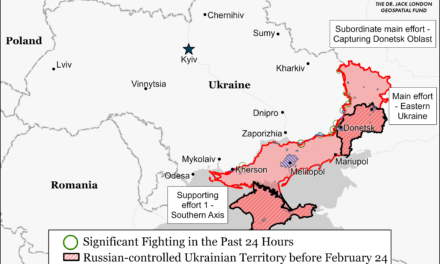
A proposed 20-point peace framework being discussed by Ukraine and the United States is intended to provide the foundation for a possible future agreement to end Russia’s war against Ukraine. President Volodymyr Zelenskyy has said that weeks of negotiations have brought the Ukrainian and American positions much closer than they were under an earlier 28-point draft, which Kyiv considered too accommodating to Russian demands. Even so, two of the most difficult questions remain unresolved: the future of occupied and contested territory, particularly in Donetsk region, and control of the Russian-occupied Zaporizhzhia nuclear power plant. The framework would reaffirm Ukraine’s sovereignty and establish a comprehensive non-aggression arrangement backed by a system for monitoring the line of contact, including space-based surveillance designed to detect violations. Ukraine would retain an armed force of about 800,000 personnel and receive security guarantees from the United States, NATO countries, and European states modeled on NATO’s Article 5 principle of collective defence. Russia, for its part, would be required to formalize a policy of non-aggression toward Ukraine and Europe in domestic legislation. The proposal also envisages a defined path to EU membership for Ukraine, preferential market access, a large reconstruction and development package, and the creation of funds aimed at mobilizing roughly $800 billion for rebuilding, humanitarian needs, and economic recovery. Ukraine would continue to observe its non-nuclear commitments and would seek an accelerated free-trade agreement with the United States. Territorial arrangements remain the most politically sensitive issue. Moscow wants Ukrainian forces to leave parts of Donetsk region that Kyiv still controls, while Ukraine favors freezing combat along the current front. Washington has suggested demilitarized areas and a possible free economic zone in the Ukrainian-held part of Donetsk. The Zaporizhzhia plant is similarly disputed: the United States has proposed joint Ukrainian-American-Russian management, while Kyiv prefers a bilateral venture with Washington alone. Other provisions address freedom of navigation on the Dnipro and Black Sea, the demilitarization of the Kinburn Spit, prisoner exchanges, the return of detained civilians and children, minority and religious protections, and Ukrainian elections after an agreement is signed. The deal would be legally binding, monitored by a multinational Peace Council chaired by Donald Trump, with sanctions for violations. A full ceasefire would begin once all parties accepted the agreement.
Read more at:
https://www.reuters.com/world/ukraine-unveils-20-point-peace-proposal-under-discussion-with-us-2025-12-24/





 Spanish
  English
  Ukrainian
  French
  German
  Chinese