

European Commission President Ursula von der Leyen has committed to delivering the most robust support package ever to assist Ukraine in facing the severe winter months. During her annual State of the European Union address to the European Parliament on September 16, von der Leyen highlighted the European Union’s dedication to providing humanitarian aid and enhancing Ukraine’s electricity and heating supplies. She emphasized the importance of strengthening the country’s decentralized power grid and centralized heating systems to withstand Russian aerial attacks.
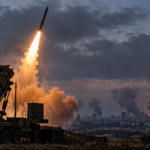
Von der Leyen also announced the EU’s plans to swiftly bolster Ukraine’s air defense capabilities. She stressed the urgent need to expedite the delivery of American Patriot interceptor missiles to Kyiv while underscoring the strategic goal of reducing Europe’s reliance on single-source military suppliers.
In pursuit of this objective, von der Leyen revealed that Brussels and Kyiv are working together to develop an “affordable modular missile-defense platform.” Central to this initiative is Project FREYJA, which seeks to combine Ukrainian combat experience with European industrial expertise to establish a sustainable, indigenous air defense network. This pan-European, multi-layered anti-ballistic missile defense project aims to create a cost-effective, open-architecture alternative to systems like the US Patriot. Supported by a coalition of ten European nations, Project FREYJA integrates NATO-standard radars with domestic interceptors to form a decentralized continental shield against Russian ballistic threats.
Beyond immediate military needs, von der Leyen proposed a broader geopolitical strategy by suggesting the formation of a “European Security Council.” This framework would enable EU leaders to regularly meet with heads of key partner states, including Canada, Norway, Ukraine, and the United Kingdom, to address hybrid threats and enhance continental defense coordination.
EU High Representative Kaja Kallas recently warned that the rise of far-right political movements, such as Alternative for Germany, poses a risk to Europe’s defense against Moscow. As Kremlin sabotage and hybrid operations approach EU borders, Kallas cautioned that passive stances on Russian aggression are creating perilous security vulnerabilities across the continent.
Más información en united24media.com



 Spanish
  English
  Ukrainian
  French
  German
  Chinese